




August 12, 2026 A Fake Job Offer, a Windows Kernel Rootkit: The Lazarus Zero-Day (CVE-2026-68820) and What It Means for Your Dental Practice
The most dangerous cyberattacks rarely announce themselves. They arrive looking like good news – a recruiter reaching out, a promising job offer, a candidate’s resume for the associate position you posted. That is exactly how one of the most capable hacking groups on the planet just turned a friendly message into total, invisible control of a Windows computer.
On August 11, 2026, Microsoft’s monthly Patch Tuesday fixed roughly 400 security flaws, and among them was one being actively exploited in the wild: CVE-2026-68820, a zero-day in Windows itself. Researchers at Check Point traced its real-world use to the North Korean state-linked Lazarus group, which chained it to a fake job offer to plant a stealthy kernel rootkit on a target’s machine. The specific victim was not a dental office – but the pattern is one every practice should understand, because it is built from ingredients any small business is exposed to.
What the flaw actually is
CVE-2026-68820 is a use-after-free vulnerability in the Windows Ancillary Function Driver for WinSock – AFD.sys – a low-level networking component that ships with every copy of Windows. In plain terms: by triggering a precise timing bug (a “race condition”), a program already running on the machine can escalate its own privileges all the way up to SYSTEM, the highest level of access on a Windows computer. Microsoft notes that no user interaction is required for this step, and the elevation happens locally, on the machine the attacker already has a foothold on.
That word “already” is the important one, and it is where a lot of people underestimate a flaw like this.
Why “it needs local access first” is not reassuring
A privilege-escalation bug is sometimes waved away because, on paper, the attacker has to be running code on the machine before they can use it. But getting that initial foothold is the cheap part of a modern attack – it is what social engineering is for. In the Lazarus campaign, Check Point’s researchers describe an intrusion that began with a job-offer lure: the target was courted with a fake opportunity and persuaded to run a file. That file ran with ordinary user permissions – limited, sandboxed, not yet dangerous.
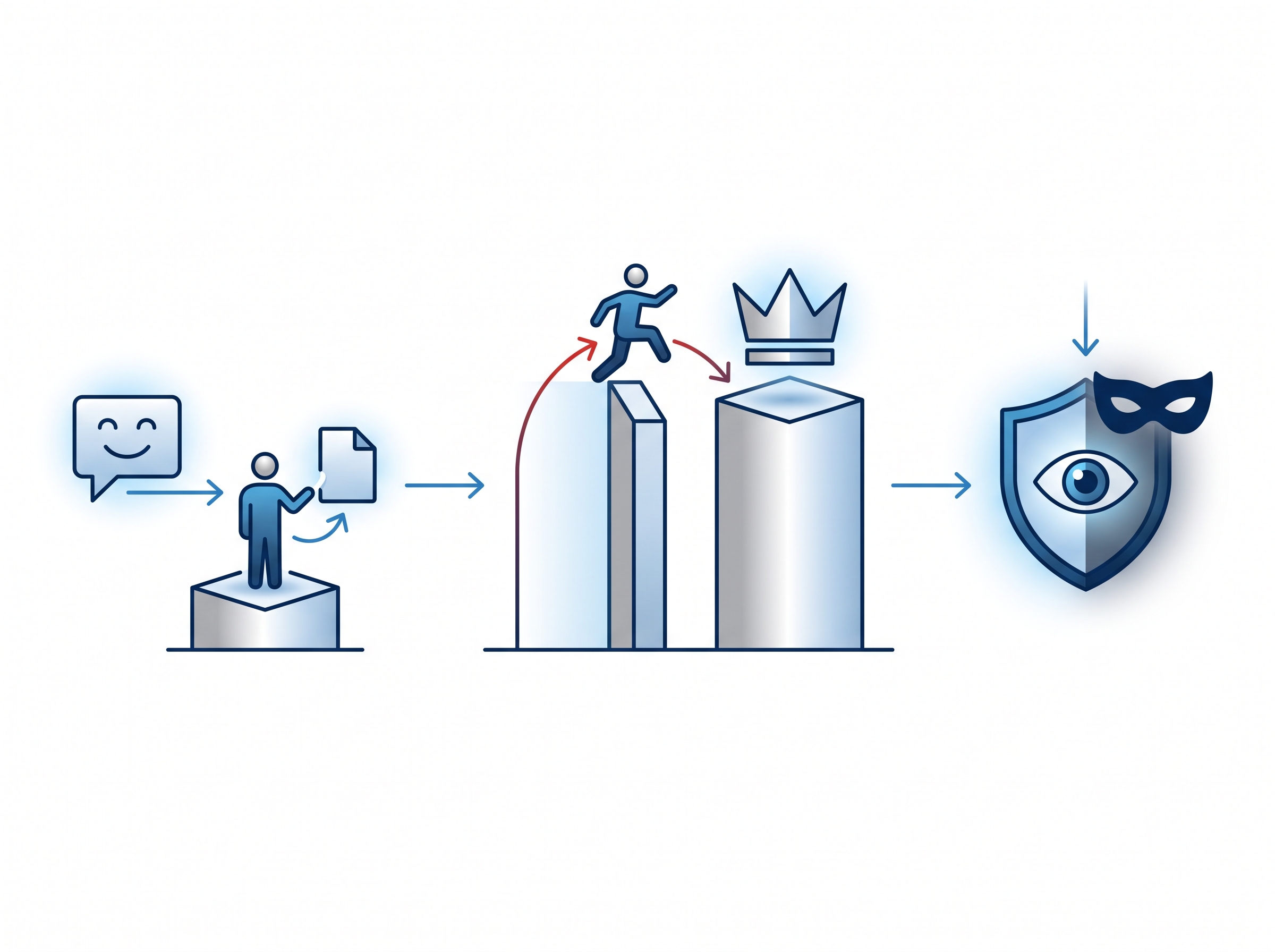
Then the zero-day did its job. CVE-2026-68820 vaulted that limited, ordinary-user foothold straight up to SYSTEM. This is the same two-stage logic behind so many serious breaches: a human is tricked into opening the door a crack, and a technical flaw kicks it the rest of the way open. We have seen the human half of this play out against healthcare directly, when a convincing phone call talked its way past a healthcare organization’s Microsoft login – no exotic exploit required, just a persuasive story. Pair a persuasive story with a zero-day and you get exactly this attack.
The part that should worry you most: the rootkit
Once Lazarus reached SYSTEM, they used it to deploy a new version of FudModule, their kernel-mode rootkit. A rootkit that runs in the kernel operates beneath the applications, beneath the operating system’s own protections, and beneath your antivirus. From there it can switch off or blind the very security tools meant to detect it, hide the attacker’s activity, and make the compromise extraordinarily hard to see or remove.
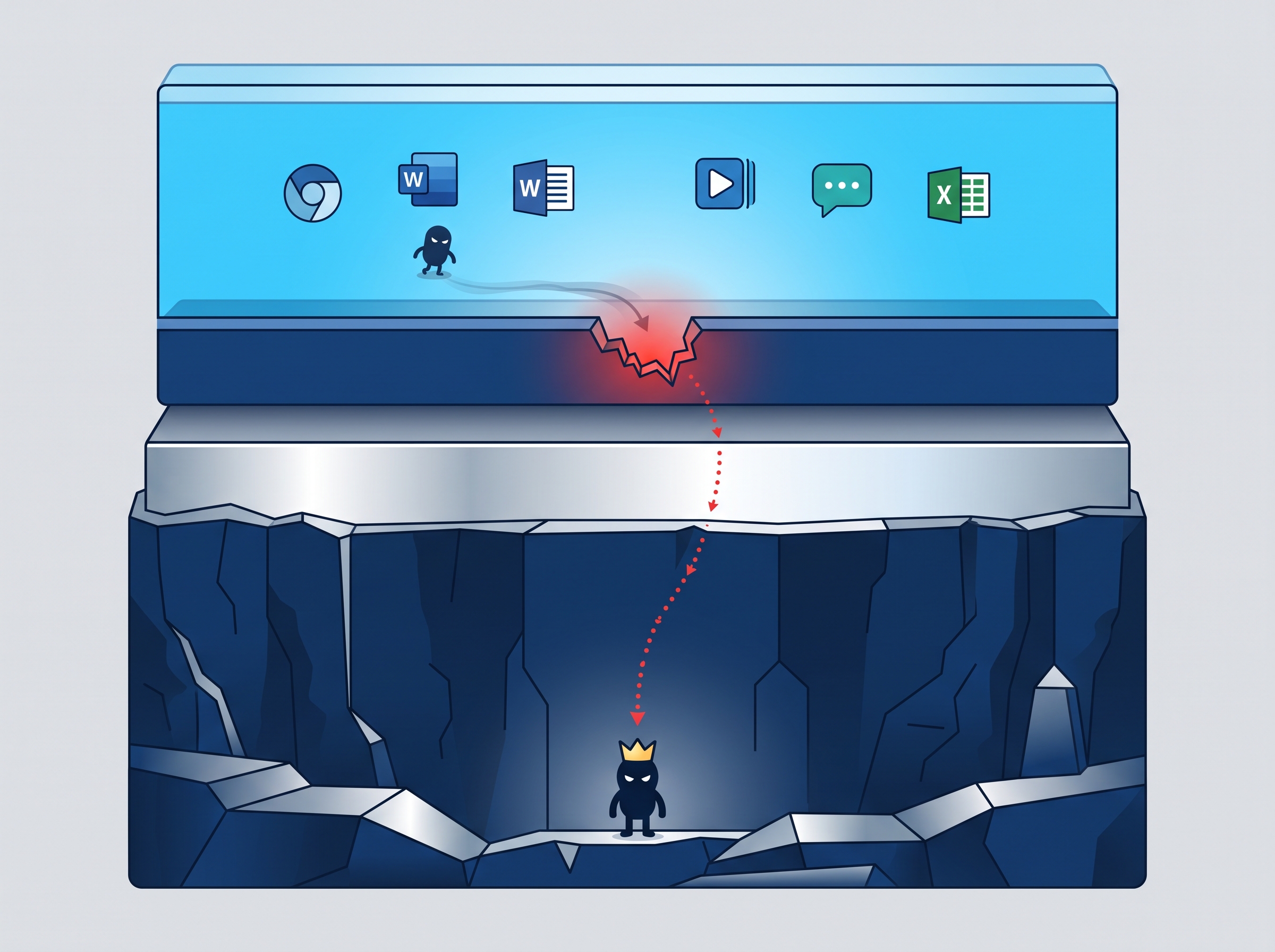
This is why the humble-sounding phrase “local privilege escalation” deserves respect. SYSTEM-level, kernel-level control is not one more step in an attack – it is effectively the end of the defensive game on that machine. And on a dental practice’s computer, SYSTEM access means access to whatever that machine can reach: the practice-management database, imaging files, patient records, saved credentials, and potentially the path to your backups. It is the same escalation nightmare we walked through when one ordinary login proved enough to take over an entire Windows network – total control, quietly obtained.
“We’re a dental office, not a defense contractor”
True – Lazarus’s headline targets are governments, banks, and cryptocurrency firms, not a three-chair practice in the GTA. But two things make this relevant anyway.
First, the vulnerability is in Windows, not in some rarefied enterprise system. Every unpatched Windows machine at your front desk and in your operatories carries CVE-2026-68820 until it is updated. State-sponsored groups pioneer these techniques; ordinary ransomware crews adopt them within weeks. The exploit does not care who owns the computer.
Second, the lure fits a dental practice perfectly. Practices hire. Owners and office managers routinely receive resumes, recruiter messages, and “candidate” attachments – and dental staff, like everyone, get job offers on email and LinkedIn. An unsolicited CV for a hygienist position, or a too-good recruiting pitch to an associate, is a completely natural thing to open. That is precisely the psychology this attack weaponizes.
What to do now
The response is practical, and most of it defends against the whole class of two-stage attack, not just this one CVE.
Apply the August 2026 Patch Tuesday updates – promptly. Microsoft’s update fixes CVE-2026-68820. Because it is under active exploitation, this is not a “next maintenance window” item; it is an update-this-week item across every practice computer. If any of your machines are still on an unsupported version of Windows, they will never receive this fix at all – which is the standing danger we detailed in why running an out-of-support operating system at the front desk is now a compliance problem.
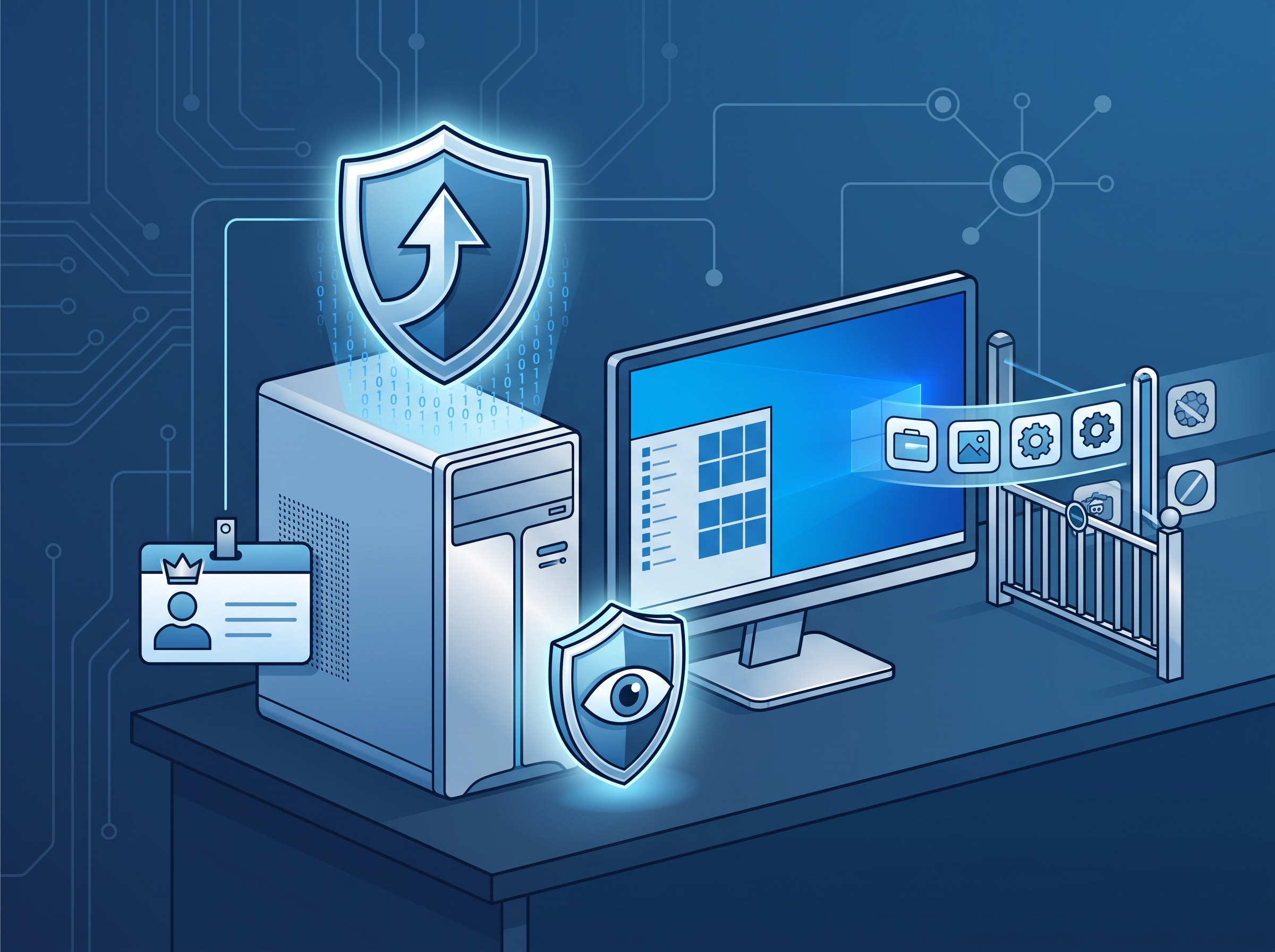
Do not let staff run as local administrators. Day-to-day accounts should be standard users. It will not stop this particular kernel flaw, but least privilege limits what stage one of an attack can do before any escalation, and it blocks a huge range of simpler malware outright.
Run – and monitor – modern endpoint protection. A rootkit’s goal is to blind your defenses, so those defenses need to be current, tamper-resistant, and actually watched. Endpoint detection and response (EDR) that alerts a human, rather than antivirus nobody checks, is what catches the unusual behavior around an escalation attempt.
Allow only approved software to run. Application allow-listing means an unexpected executable delivered by a “recruiter” simply cannot launch in the first place – it stops stage one before it starts.
Treat job offers and candidate files as phishing. Train the team: unsolicited recruitment messages, resume attachments, and links to “job details” get the same scrutiny as any suspicious email. Verify senders independently. When in doubt, do not open it on a practice computer.
Segment the network and keep offline backups. If one machine is compromised, segmentation and least privilege decide whether the damage stops there or spreads to your server and records. And offline, tested backups are what turn a worst-case compromise from a catastrophe into a recovery.

The takeaway
CVE-2026-68820 is a single Windows flaw, now patched – but the attack around it is a template that will be reused endlessly: charm a human into running something small, exploit a flaw to escalate to total control, then hide beneath the defenses. The good news is that the countermeasures are the same durable fundamentals that defend against nearly everything else – patch quickly, limit privilege, watch your endpoints, and teach people that a great job offer can be bait.
Compudent Systems helps dental practices across the GTA and Ontario put exactly these fundamentals in place – keeping every practice computer patched against actively exploited flaws like this one, removing unnecessary administrator rights, deploying and monitoring real endpoint protection, and segmenting the network so a single tricked click cannot become a practice-wide breach. If you are not certain your workstations are current on this month’s Windows updates, or that a compromised front-desk PC could not reach your patient records, contact Compudent Systems for an endpoint and patch-management review. The attackers are counting on a friendly-looking message and a machine nobody remembered to update.
Sources & further reading:
- Microsoft August 2026 Patch Tuesday fixes 400 flaws, 3 zero-days – BleepingComputer
- Shattering the Dream: When a Job Offer Becomes a Zero-Day Attack – Check Point Research
- CISA Known Exploited Vulnerabilities Catalog
Related Reading
- 974 Patches, Two Being Exploited Right Now: How a Dental Practice Should Read September’s Patch Tuesday
- Ransomware Gangs Are Now Through the Front Door: What the SonicWall SMA1000 VPN Attacks Mean for Dental Practices
- The Phone System Is a Computer Too: An Actively Exploited Switchvox Flaw and What Your Practice Must Patch