



August 30, 2026 Half Your Connected Devices Carry a Critical Flaw. Can Agentic AI Finally Clear the Patching Backlog?
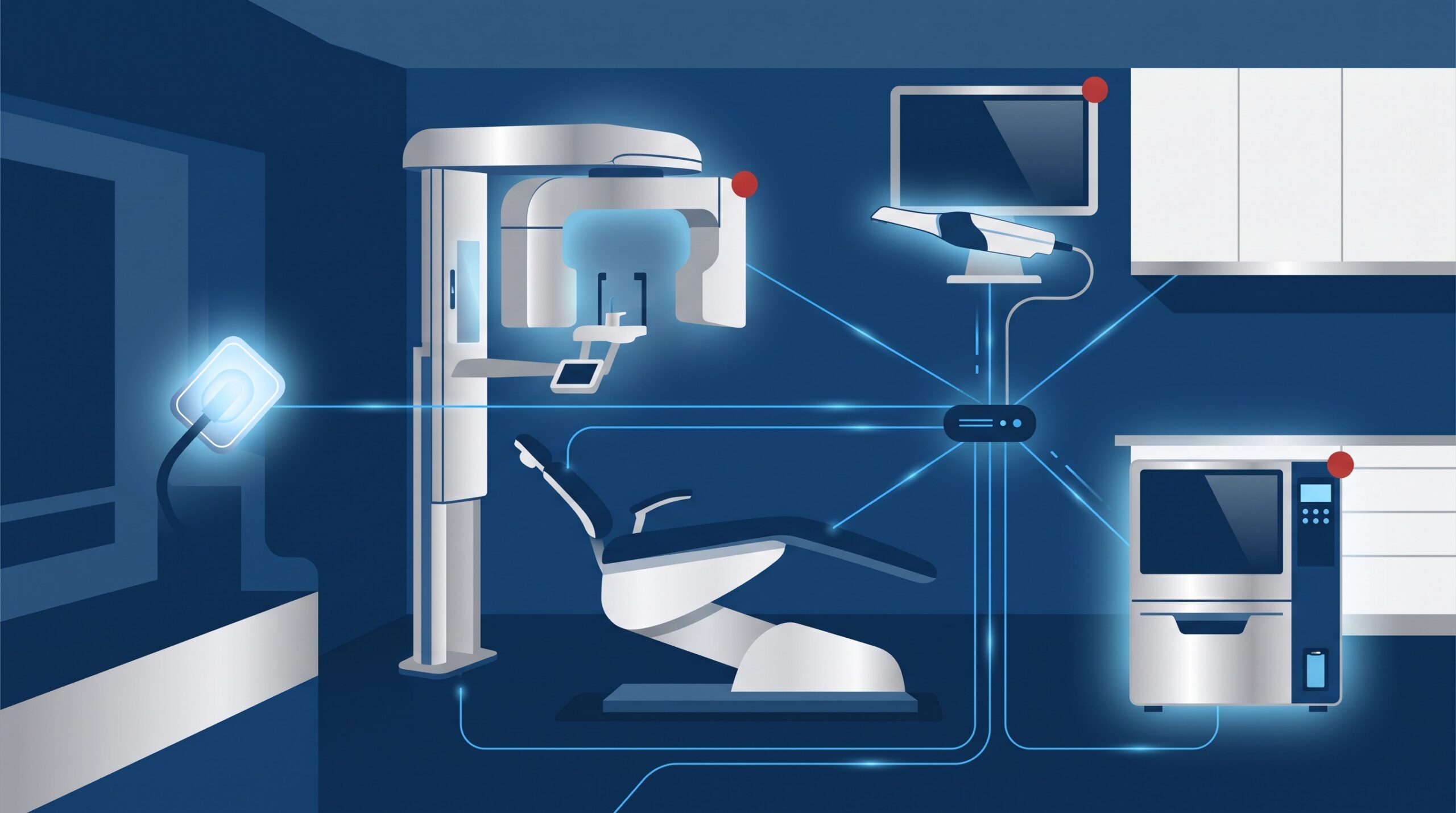
Here is a statistic worth sitting with. According to medical-device security firm Trimedx, more than half of connectable medical devices carry a known critical vulnerability, and 99% of hospitals are running connected devices with known, actively exploited flaws. Those numbers describe hospitals, but the physics are identical in a dental office: the intraoral sensor, the cone-beam unit, the scanner, the sterilizer monitor, the networked camera, and the VoIP phone are all computers, and computers accumulate unpatched holes. The difference is only scale. On August 26, 2026, Trimedx announced that it is aiming a new generation of agentic AI at exactly this problem – and the shift is worth understanding even for a practice that will never buy an enterprise platform.
Why connected devices are the hardest thing to patch
Practices already know they should patch Windows and their practice-management software. Connected medical and imaging devices are a harder category for three specific reasons. First, they are regulated: because an imaging device is an FDA-cleared medical product, you usually cannot patch it yourself – a fix has to come from the manufacturer, validated and released on the vendor’s timeline, which can lag a disclosed vulnerability by months. Second, they run old, embedded operating systems that were current when the device shipped and are now unsupported, quietly sitting on your network years past their software’s end of life. Third, and most quietly dangerous, many of them were never written down as computers at all. They are “the X-ray” or “the scanner,” not “a networked server with a web interface” – which is precisely how they escape every patch inventory. We have written before about why where an imaging sensor was made and what it quietly talks to is now a security question, not just a purchasing one.
The real problem isn’t detection – it’s the backlog
It is tempting to think the fix is a better scanner that finds the flaws. But most organizations can already generate a list of vulnerabilities; what they cannot do is act on it. When more than half your devices show a critical finding and each one needs to be researched, risk-assessed, matched to a fix or a workaround, and scheduled around clinical use, the list becomes noise. A backlog that can never be cleared by hand is functionally the same as having no list at all – you cannot tell which three devices actually put patients and data at risk this week from the two hundred findings that do not. This is the same operational trap that makes device attacks so damaging in practice, and why they are already disrupting patient care at a quarter of healthcare organizations.

What “agentic AI” actually changes here
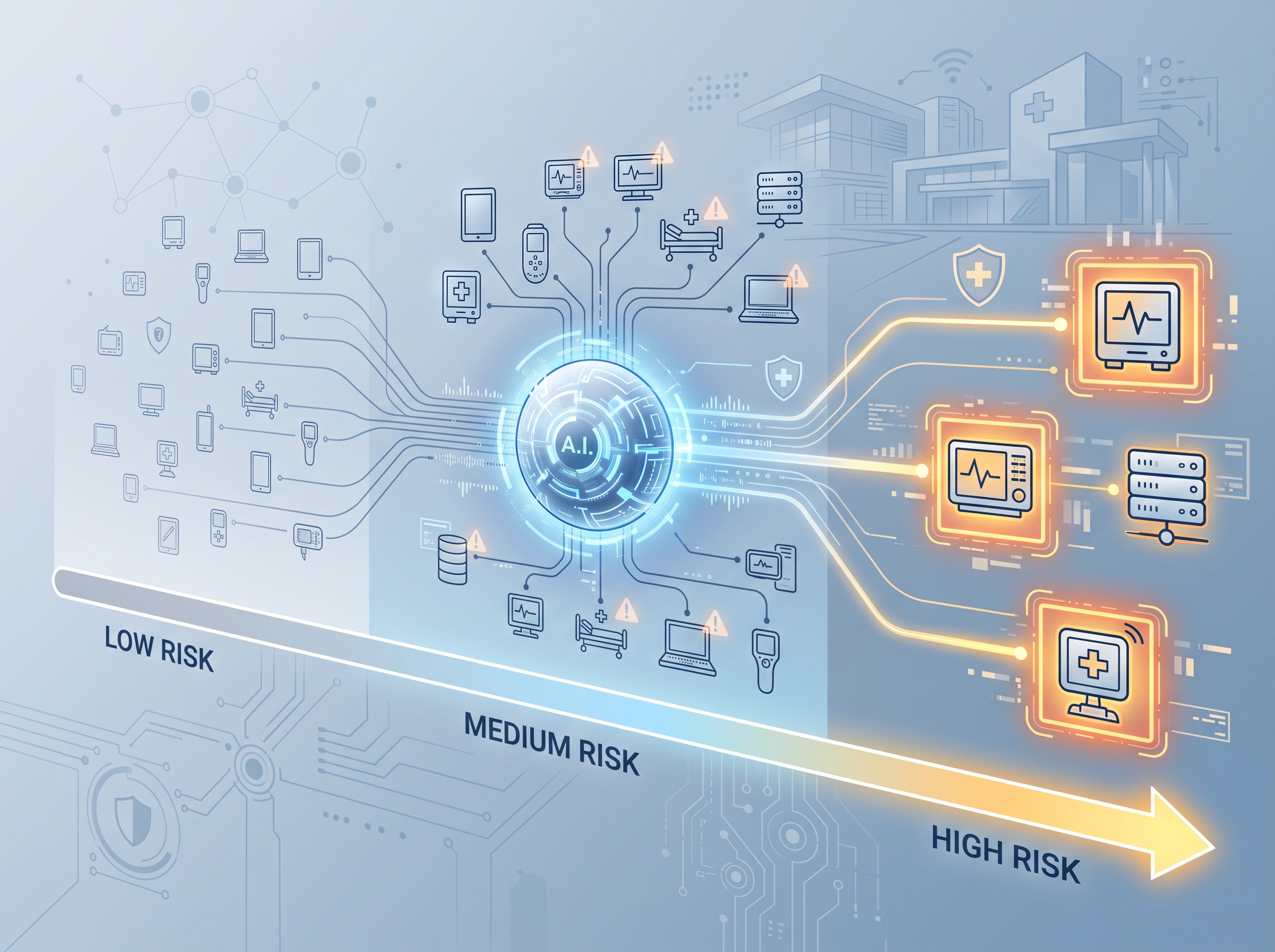
“Agentic AI” is an overused phrase, so it is worth being precise about what Trimedx is describing. Its TMX Protect platform now lets a security team query its device and vulnerability data in plain language – ask which assets present the greatest risk, generate a risk assessment, and get a prioritized remediation plan back – rather than reading raw scan output. Crucially, the tool weighs both cybersecurity severity and clinical importance, and it helps find mitigations for devices that have no manufacturer-approved patch. Trimedx says the result is a 75% average reduction in remediation time for cybersecurity projects, on top of device identification accuracy it puts as high as 95%. Strip away the marketing and the meaningful part is this: the AI is aimed at the triage and prioritization bottleneck, not at detection. That is the right target, because triage is where human teams drown.
That is also the honest caveat. This is an enterprise platform sold to health systems managing tens of thousands of devices. A three-operatory practice in Ontario is not the customer, and a 75% efficiency gain on a backlog you do not have the staff to work at all is not a purchase decision for you. So what is the takeaway for a normal practice?
The same discipline, scaled down to a dental practice
The value of the enterprise story is that it spells out the correct method, and the method scales down to something a practice can genuinely do. You do not need an AI platform to apply it – you need the discipline it automates.
- Build a real device inventory. List every networked device, not just the PCs: intraoral sensors, the CBCT and pano units, intraoral scanners, sterilizer and equipment monitors, cameras, door controllers, and VoIP phones. A device that is not on the list is never patched, never segmented, and never noticed until it is the entry point.
- Know what each device is and what it talks to. For each one, capture its operating system, its firmware version, whether the manufacturer still supports it, and what it connects to on the network and the internet. This is the visibility the AI tools are built to produce – you can approximate it with a competent IT partner and a network scan.
- Prioritize by risk, not by count. Do not try to fix everything. Ask the enterprise question at small scale: which one or two devices combine a serious, exploitable flaw with real exposure and real clinical importance? Fix those first. Everything else is scheduled, not ignored.
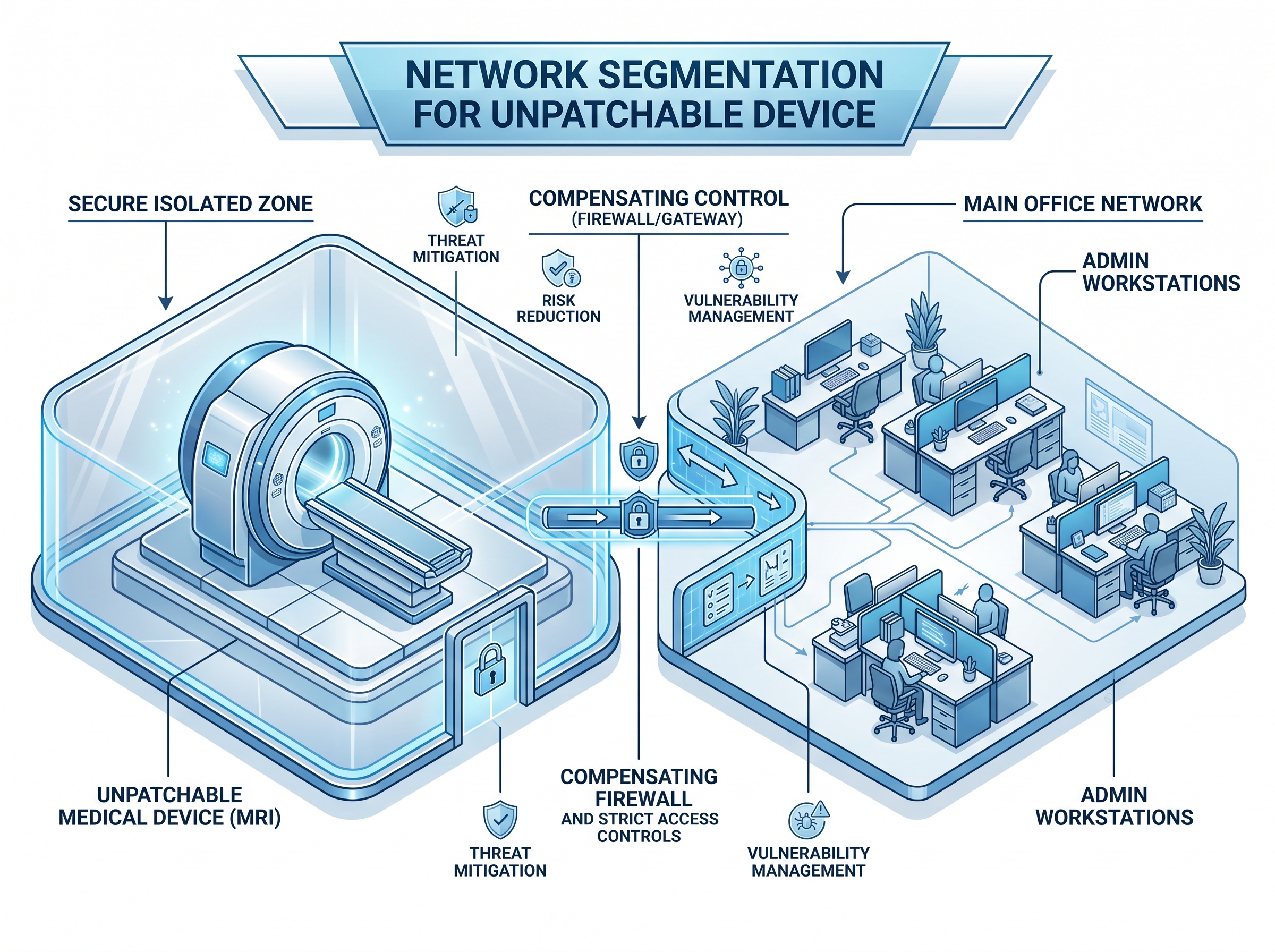
- When you cannot patch, contain. This is the most important move, because most medical devices cannot be patched on your schedule. Put the device on a segmented network that cannot reach the internet or the rest of the office, restrict who and what can talk to it, and monitor it. A vulnerable device that is walled off is a manageable risk; the same device flat on your main network is a breach waiting to happen.
- Fold devices into one patch and review routine. The reason these systems rot is that they live outside the process that keeps everything else current – the same gap that makes it so easy for one patching policy to quietly miss the systems it was never told about. Every device belongs on one list, reviewed on a schedule.
Where the AI actually reaches your practice
You will not buy TMX Protect, but you will still feel this shift – through your IT provider’s tooling. The remote monitoring and management (RMM) platforms, vulnerability scanners, and security services that a managed IT partner uses on your behalf are absorbing the same agentic-AI capabilities: natural-language triage, risk-based prioritization, and automated remediation planning. The practical implication is that the bar for “we keep an eye on the devices” is rising. It is fair to ask whoever handles your IT a direct question: do you inventory our connected medical devices, and how do you decide which risks to act on first? If the answer is that devices are outside scope, that is the gap the whole industry is now racing to close.
The bottom line for a dental practice
The headline number – half of connected devices carrying a critical flaw – is not a reason to panic and it is not solved by buying an AI. It is a reminder that the equipment which makes a modern practice run is also a fleet of small, often unpatchable computers, and that securing them is an exercise in knowing what you have, prioritizing what matters, and containing what you cannot fix. Agentic AI is making that exercise faster for hospitals with thousands of devices. For a dental practice with a few dozen, the same three habits – inventory, prioritize, segment – get you most of the protection with none of the platform cost.
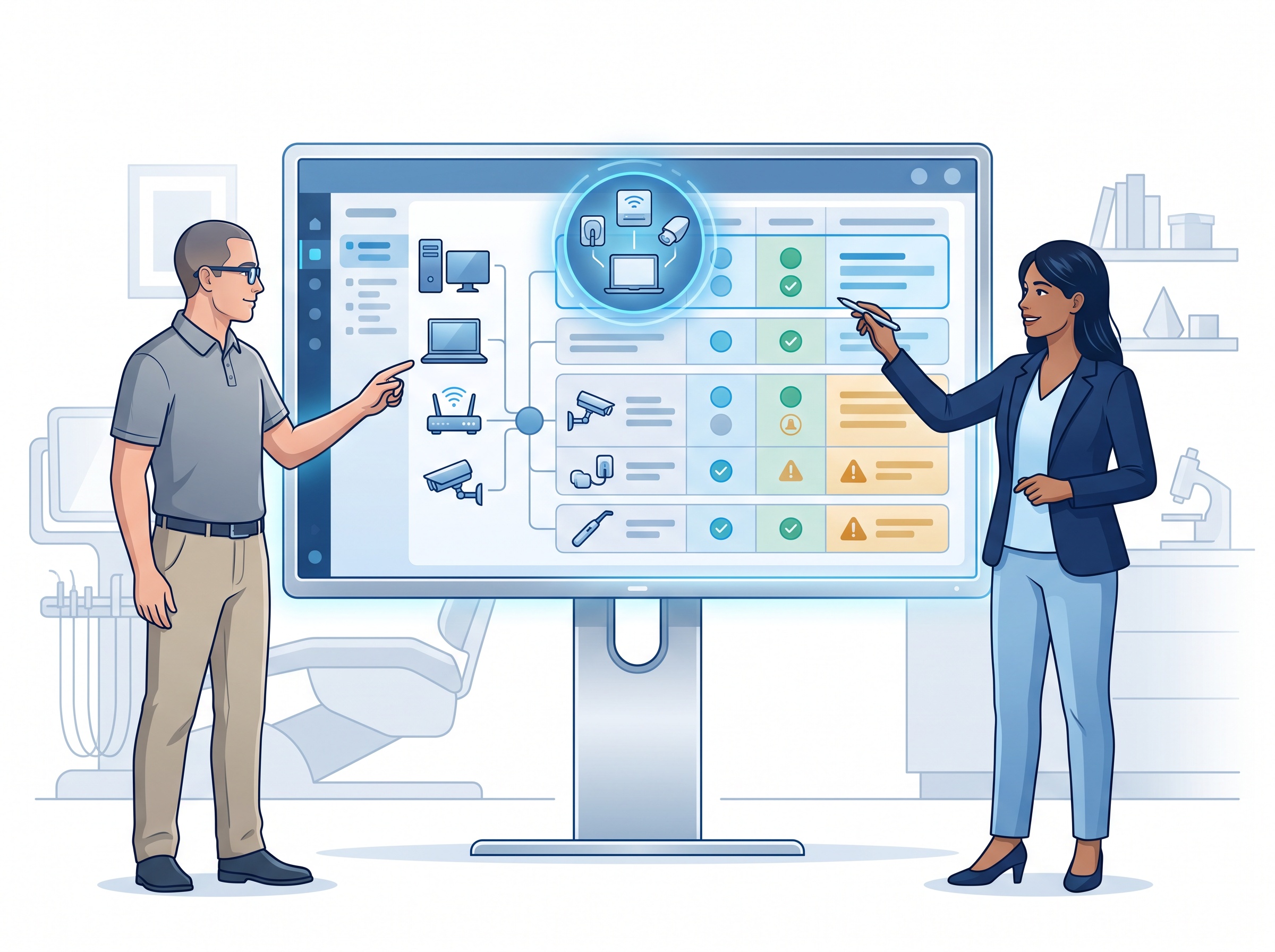
If you have never taken a full inventory of the connected devices on your practice network – or you are not sure which of your imaging units and scanners are running unsupported software, what they can reach, or whether they should be segmented off – contact Compudent Systems. We help dental practices across Ontario find every networked device, understand its real risk, isolate the ones that cannot be patched, and build the review routine that keeps a forgotten scanner from becoming the way an attacker gets in.
Sources & further reading:
- Trimedx introduces agentic AI capabilities that reduce medical device cybersecurity remediation time by 75% – GlobeNewswire
- Trimedx Adds AI to Cybersecurity Platform to Speed Up Risk Remediation – 24×7
Related Reading
- The Other Computers in Your Operatory: Why Connected Dental Devices Are the Attack Surface Nobody Audits
- You Can’t Patch That Old Sensor or CBCT: How to Safely Keep Legacy Imaging Devices on Your Dental Network
- 974 Patches, Two Being Exploited Right Now: How a Dental Practice Should Read September’s Patch Tuesday