




October 20, 2026 Your Practice Website’s SEO Plugin May Have Been Backdoored: The Rank Math PRO Supply-Chain Compromise
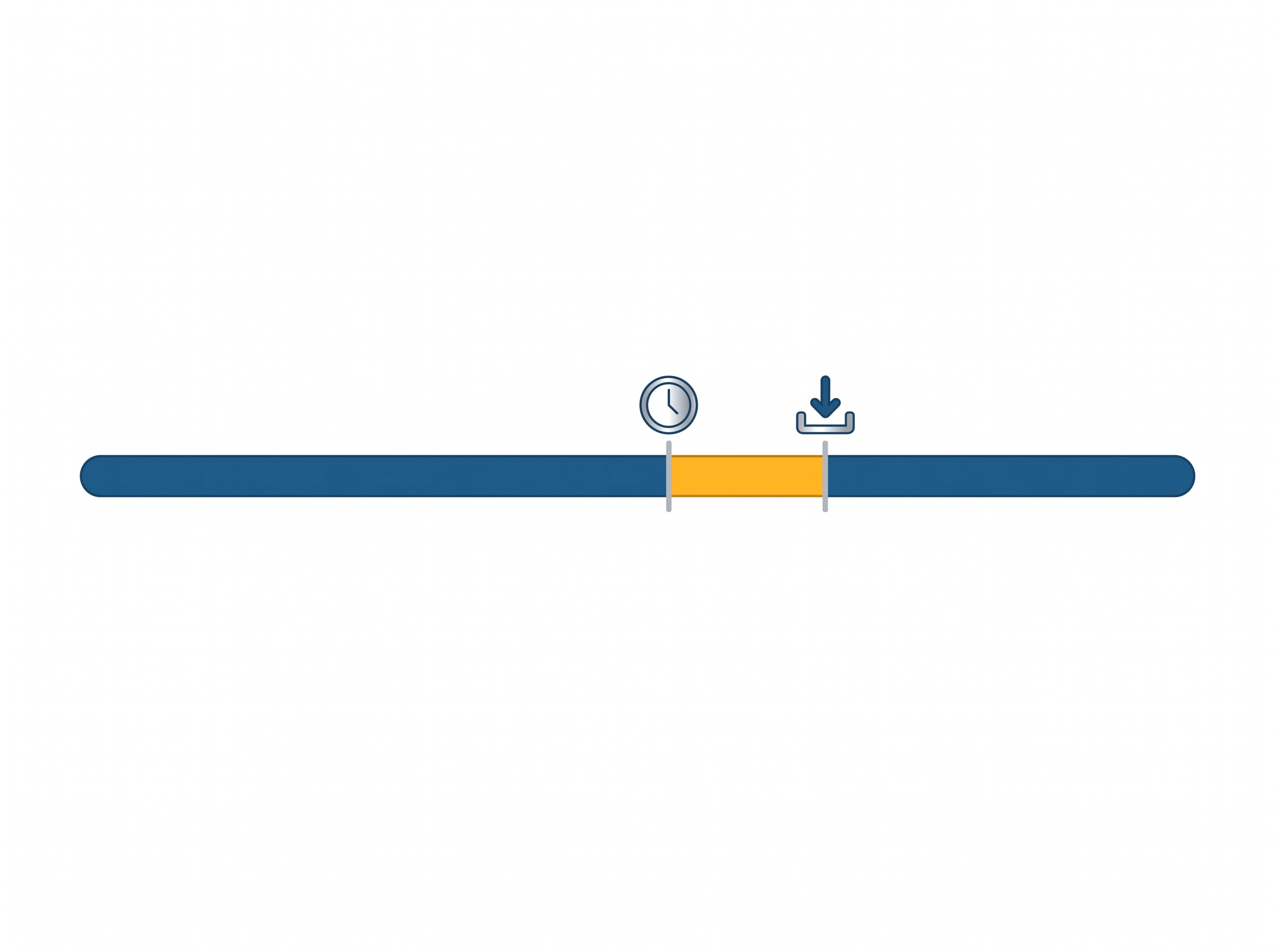
On October 16, Rank Math — maker of one of the most widely used search-optimization plugins for WordPress — published a security notice that should make every practice with a website pay attention. Copies of its paid plugin, Rank Math PRO, that were downloaded from the vendor’s own site or delivered as automatic updates between 20:02 UTC on October 15 and 07:12 UTC on October 16 contained malware. Any site that installed and activated one of those copies, the company said, should be treated as compromised.
This was not a flaw someone found in the code and might exploit someday. It was a supply-chain compromise: the trusted, paid software, delivered straight from the legitimate source, was carrying a hidden backdoor. Wordfence assigned the incident CVE-2026-111862 and rated it 9.8 out of 10 — about as severe as a website vulnerability gets. For a dental practice, the uncomfortable question it raises is simple: who is actually watching the software your website runs on?
What actually happened
Rank Math PRO is the commercial version of the plugin, downloaded and updated through a customer account on rankmath.com rather than the public WordPress.org directory. During a window of roughly eleven hours, the files served from that channel were poisoned. The plugin’s job — helping a site rank in search — is exactly the kind of background utility a practice installs once and never thinks about again, which is precisely what made it a useful vehicle for an attacker.
Importantly, the free Rank Math SEO plugin on WordPress.org — the one with millions of installs — was not named in the incident. This was the paid PRO edition, and only copies obtained during that specific window. The vendor has since removed the malicious files and released a clean build, version 3.0.124.
Why you cannot tell from the version number
Here is the detail that trips practices up. The affected release was numbered 3.0.123, but that version first shipped cleanly on October 7 — more than a week before the attack window opened. So the version number alone tells you nothing. A copy of 3.0.123 downloaded on October 10 is fine; the same version number downloaded during the window on October 15 may be backdoored.
Rank Math’s notice sorts sites into three cases. If you installed and activated 3.0.123 during the window, treat the site as compromised — even if it has since been updated to the clean 3.0.124. If you installed it but never activated it, delete the files, install 3.0.124, and run a scan. If you only downloaded it and never installed it, nothing in this incident alone suggests you were affected. If you simply do not know when your plugin last updated — which describes most practices — that uncertainty is itself the problem.
The part that makes this dangerous: a self-restoring backdoor
The reason this incident earns a 9.8 is not just that malware got in; it is how stubbornly it digs in. According to the advisories from Rank Math and Wordfence, the malware can recreate its hidden backdoor whenever someone merely visits the site. Simply installing the clean 3.0.124 does not fix a compromised site — it replaces the plugin but leaves behind anything the malware already planted elsewhere.
And it plants a great deal. The attacker may have dropped backdoor files into other plugins’ folders, into theme folders, and into the special “must-use” plugins directory; created hidden administrator accounts; added a fake file disguised as part of WordPress itself; altered the site’s .htaccess so that innocuous-looking files execute as code; and added scheduled tasks and SSH keys to maintain access. Security firm Patchstack, which classified the issue as a backdoor, noted bluntly that because the attack happened on Rank Math’s own systems, there was no filter rule that could have blocked it in advance. The practical upshot: any password, database credential, or API key the site could reach should be assumed exposed.
Why a dental practice should care about its website
It is tempting to shrug this off — the practice website is “just a brochure,” the real patient data lives in the practice-management system. That reasoning is exactly the gap attackers rely on. A practice website is rarely isolated: it collects new-patient and contact-form submissions, often integrates with an online booking or scheduling tool, sends email through connected accounts, and is administered with passwords that staff frequently reuse elsewhere. A fully compromised site with hidden admin accounts and harvested credentials is a foothold, not a nuisance.
There is also the public-trust dimension. A backdoored dental website can be quietly turned into a host for scam pages, malware, or search-spam that redirects your own prospective patients to malicious destinations — damaging the reputation of the practice whose name is on the domain. The same discipline we apply to clinical systems, where a single stolen credential can unravel an entire office, applies to the website that represents the practice to the world.

What to do if you run Rank Math PRO
If your site uses the PRO plugin, the first step is to establish when it last updated and whether that fell inside the October 15–16 window — and if you cannot determine that with confidence, treat the site as potentially affected and investigate. The recovery sequence recommended by the vendor matters, because order is everything with a self-restoring threat:
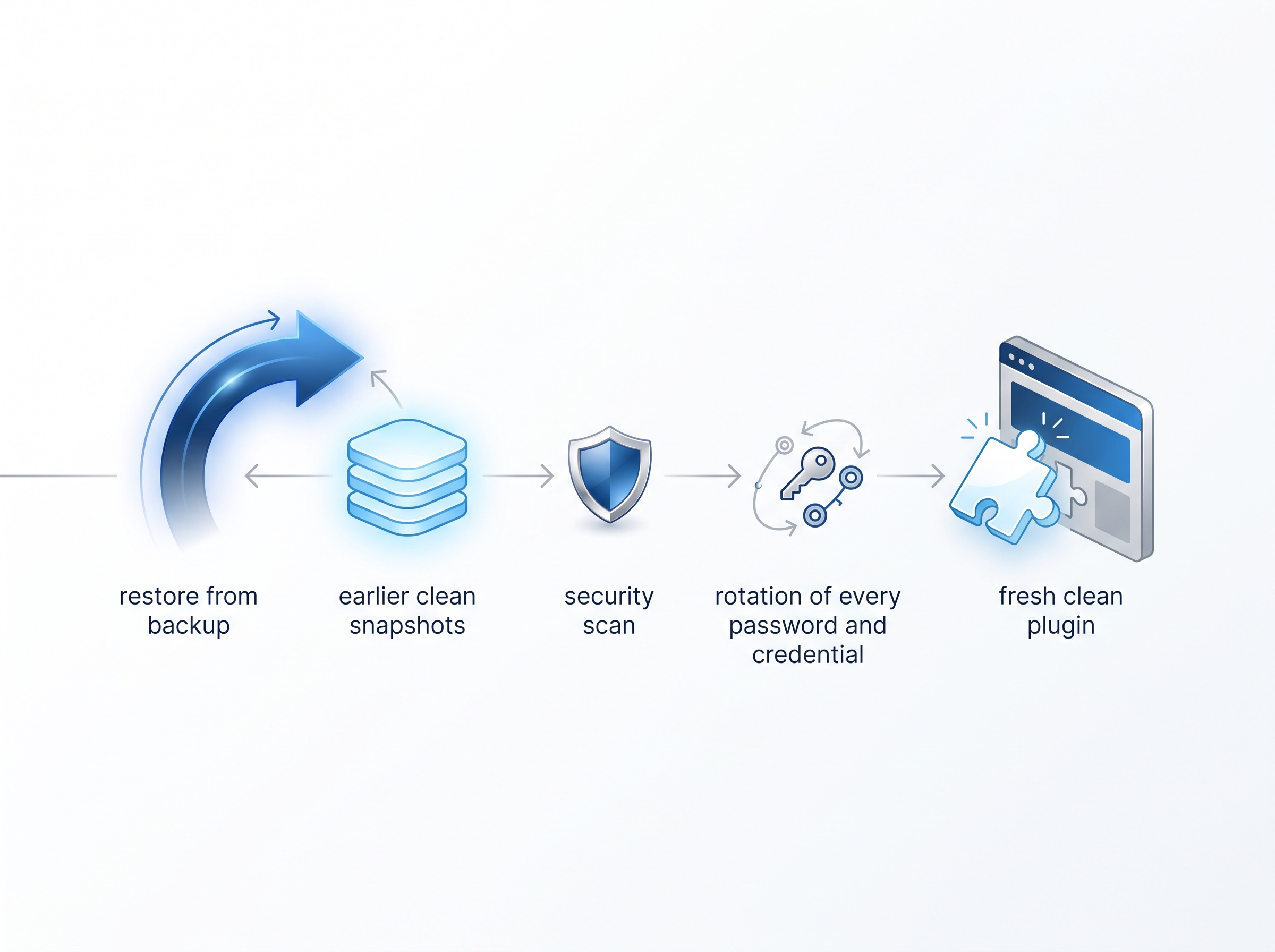
- Prefer a clean restore. If you hold a backup of the site and database from before 20:02 UTC on October 15, restoring it is the most reliable fix — this is one more reason good, retained backups are not optional. After restoring, run a security scan, change every password and credential, and only then install the clean 3.0.124.
- If there is no clean backup, cleanup runs in a fixed order. Delete the entire plugin folder via FTP or the host’s file manager (deactivating is not enough), remove the malicious database entries the notice identifies, and block the site’s outbound connections to the attacker’s domain. Only after the self-restoring mechanism is cut off should you hunt for the planted files, fake accounts, and scheduled tasks.
- Rotate everything. Assume all secrets the site could touch are burned: admin passwords, database credentials, API keys, and any reused staff passwords. Blocking the malicious outbound traffic at a proper business-grade firewall adds a layer the website itself cannot.
The broader lesson: nobody was watching the plugins
Supply-chain attacks like this one cannot be prevented by the practice — the malicious code came from a trusted vendor, delivered through the legitimate update channel. What can be controlled is how quickly a practice notices, how limited the blast radius is, and how fast it can recover cleanly. That means keeping an inventory of what plugins a site actually runs, applying updates through a monitored process rather than a forgotten auto-update, retaining clean off-site backups, and watching the site for the behaviour a compromise produces. The practices that weathered this incident calmly were the ones that could answer, within minutes, “what is installed, when did it update, and do we have a clean restore point?”

How Compudent Systems can help
At Compudent Systems, we help dental practices across the GTA and Ontario treat their website as the connected, patient-facing system it really is — not an afterthought. That means maintaining an inventory of the plugins and software your site depends on, applying updates through a managed and monitored process, keeping clean and retained backups you can actually restore from, and responding quickly when a supply-chain incident like the Rank Math compromise lands. Contact Compudent Systems for a website and security assessment, and let us make sure that if a trusted plugin ever turns on you, your practice can recover in hours — with its patient data, credentials, and reputation intact.
Sources & further reading:
- Popular WordPress SEO Plugin Rank Math PRO Hijacked to Deliver Self-Restoring Backdoor (The Hacker News)
- Rank Math PRO 3.0.123 Security Incident Notice (Rank Math)
- Rank Math SEO PRO 3.0.123 Malware Advisory (Wordfence)
Related Reading
- Hacked in Five Hours: The Critical WordPress Flaw (CVE-2026-87902) Your Practice Website Needs Patched Today
- Your Practice Website Is Part of Your Attack Surface: Hackers Are Forging Logins Into WordPress Right Now
- One Click and You Have a New Admin: The Elementor Flaw (CVE-2026-62062) Threatening Dental Practice Websites