



August 4, 2026 When the Tool That Manages Your Network Gets Hacked: The N-able N-central Breach and What It Means for Dental Practices
You have almost certainly never logged into it. You may not know its name. But there is a good chance that a piece of software called an RMM platform can already see every computer in your dental practice, push software to them, run commands on them, and log in remotely without anyone at your front desk noticing. It is the tool your IT provider uses to keep your office running. This week, one of the most widely used of these platforms became the target of an active attack, and the way this story works is a lesson every practice owner should sit with.
On August 1, 2026, the vendor N-able confirmed that attackers were actively exploiting a flaw in N-central, its flagship Remote Monitoring and Management platform. Two days later, on August 3, the United States Cybersecurity and Infrastructure Security Agency added the vulnerability, tracked as CVE-2026-18577, to its Known Exploited Vulnerabilities catalog. That catalog is not a list of theoretical bugs. It is CISA’s list of flaws that criminals are provably using right now. N-able has shipped an emergency hotfix, but the reason this belongs in a dental publication has nothing to do with whether you run N-central yourself.
What actually happened
CVE-2026-18577 is an authentication bypass. In plain terms, it lets an attacker get past the login screen of an N-central server using an alternate path the developers did not intend, and take over the account. What makes it worse is the backstory: the flaw is an incomplete fix for an earlier vulnerability (CVE-2026-18556). The first patch did not fully close the door, and attackers walked back through the gap. N-able released hotfix version 2026.3.1.7 and urged every customer to install it immediately. Cloud-hosted servers were updated automatically; on-premises servers have to be patched by hand, which means some are still exposed while their owners catch up.
Investigators reported that attackers used the bypass to take over N-central servers, reach the endpoints those servers manage, and quietly maintain their access afterward. This is not a smash-and-grab. It is the kind of foothold that lets an intruder sit inside a network and wait.
Why a management tool is the ultimate skeleton key
To understand why security professionals treat RMM compromises as a worst case, picture what the tool is built to do. An RMM platform exists so that one technician can manage hundreds or thousands of computers across many different businesses from a single dashboard. It has permission to install software, change settings, run scripts, and connect remotely to any machine under its control. That is enormously convenient on a normal day. It is catastrophic on a bad one.

When an attacker takes over the management platform, they inherit all of that power at once. They do not have to break into each computer individually. They log into the tool that was already trusted to reach everything, and they use it exactly as intended, only now on behalf of a criminal. This is why the flaw is best understood as a master key rather than a single broken lock. One bypassed login can translate into control over every endpoint the platform touches.
“But my practice does not use N-central”
Here is the part that surprises most practice owners. You probably are not an N-able customer, at least not directly. RMM platforms like N-central are used by managed service providers and IT companies to run their clients’ networks. If your practice outsources its IT, or even if you have one internal IT person who uses management software to keep the office patched and monitored, there is a strong chance an RMM tool of some kind is installed on your computers right now.
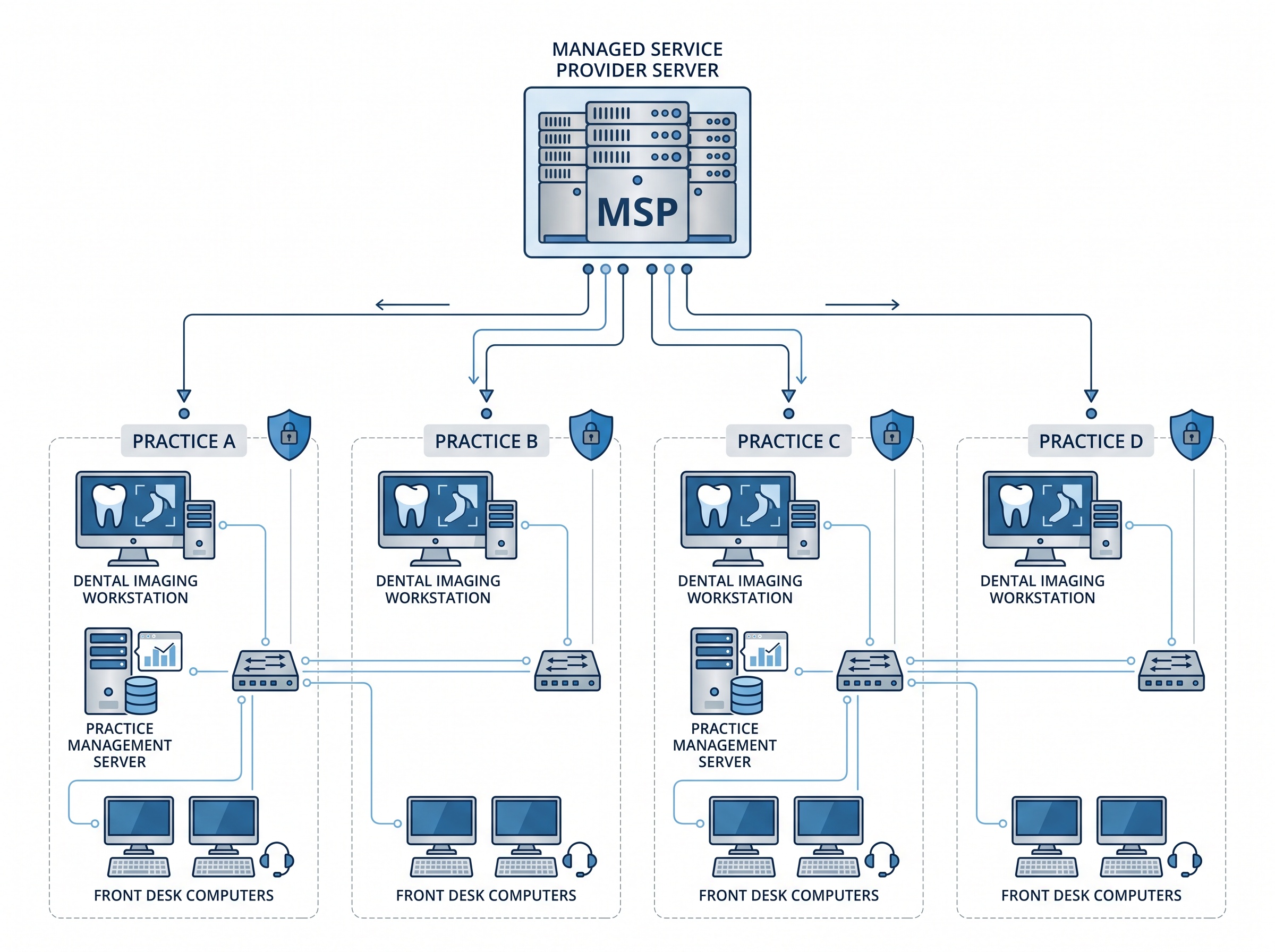
That is what makes these supply-chain attacks so effective. The criminals do not need to find and target your specific dental office. They compromise the provider in the middle, and every practice that provider manages is suddenly within reach through a single breach. It is the same pattern the industry has watched play out again and again with other management platforms, from Kaseya and ConnectWise ScreenConnect to SimpleHelp and the infamous SolarWinds Orion incident. The management layer is a high-value target precisely because so many downstream businesses trust it implicitly.
What a compromise would mean for your patients
For a dental practice, the endpoints an RMM tool can reach are not abstract. They are the workstation at the front desk, the server running your practice-management software, and the computers connected to your imaging and radiography systems. All of it sits on the same network the management platform is trusted to administer. An attacker who reaches those systems can deploy ransomware that freezes your entire operation, or quietly copy patient records, appointment histories, and images out the door.
Under PHIPA in Ontario and privacy law across Canada, patient health information that is accessed or exfiltrated through a compromised vendor is still your responsibility to safeguard and, if breached, to report. “Our IT company got hacked” is an explanation, not a defense. Regulators and patients expect you to have chosen and overseen your providers with care, which is exactly why the next section is about oversight rather than technical wizardry.
Questions to ask your IT provider this week
You do not need to understand authentication bypasses to manage this risk. You need to make sure someone competent is on top of it, and a few direct questions will tell you a great deal.

Start with the obvious: Do we use N-able N-central, and if so, has it been updated to hotfix 2026.3.1.7 or later? If your provider uses a different RMM platform, ask the same question in general terms: what remote-management software has access to our systems, and how quickly is it patched when a flaw like this appears? Then go a step further. Ask whether access to that management tool is protected by multi-factor authentication, whether logins to it are monitored and alerted on, and whether your practice’s network is segmented so that a single compromised device cannot reach your imaging and patient records unimpeded. Finally, ask the accountability question: if your management platform were ever compromised, how and how quickly would we be told? A provider who answers these clearly and without defensiveness is one worth keeping. Vague or annoyed answers are themselves a finding.
The trust you cannot see
The uncomfortable truth of modern IT is that your practice’s security depends on tools you never see and vendors several steps removed from your reception desk. That is not a reason for alarm, but it is a reason for diligence. The businesses that weather incidents like this one are not the ones that got lucky. They are the ones whose IT was patched fast, monitored closely, and segmented sensibly, so that even a compromised management tool ran into walls instead of an open path to patient data.
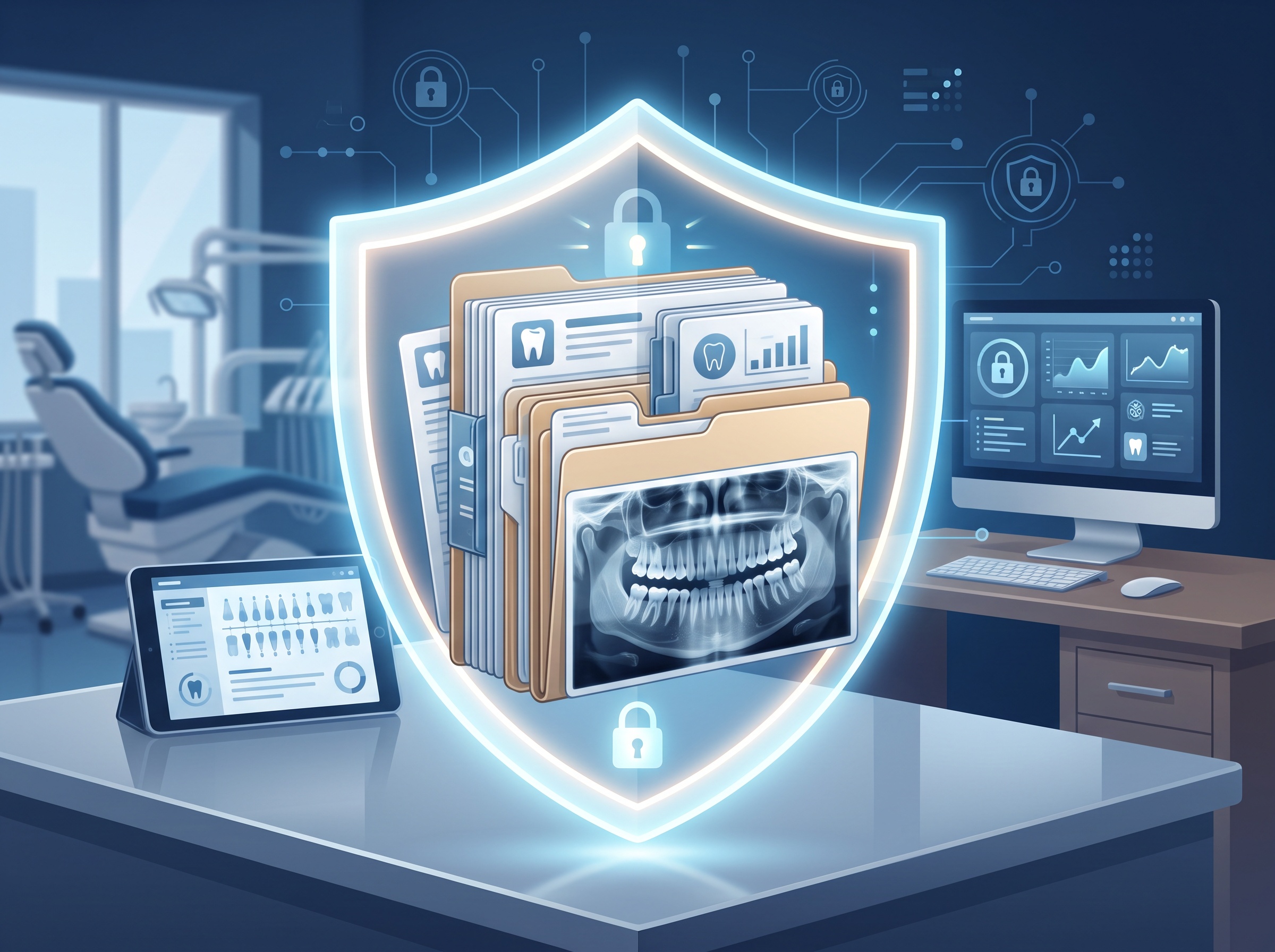
Compudent manages the networks and endpoints of dental practices across the GTA and Ontario, and we treat the security of our own management tools as seriously as the systems they protect: prompt patching, multi-factor access, active monitoring, and segmentation that keeps imaging and patient records walled off from everything else. If you are not certain what remote-management software can reach into your practice right now, or how fast it gets patched when CISA raises an alarm, that is the conversation to have this week. Contact Compudent Systems for a review of your practice’s IT and vendor security before an unseen tool becomes a reportable breach.
Sources & further reading:
- CISA Adds One Known Exploited Vulnerability to Catalog (CVE-2026-18577, N-able N-central)
- N-able warns of N-central auth bypass flaw exploited in attacks – BleepingComputer
Related Reading
- A Perfect 10, No Password Required: The N-central Zero-Day (CVE-2026-86218) Your IT Provider Must Have Patched
- Public Exploit Code Is Now Out for a Critical SCCM Flaw: What CVE-2026-47301 Means If Anyone Manages Your Practice’s Windows Fleet
- A Forged Login Walks Straight Into SharePoint: What the Actively Exploited CVE-2026-55040 Auth Bypass Means for Dental Practices