




October 22, 2026 The Vulnerability Is in the Web Server Itself: PHP2Shell and Why Your Practice’s Website and Portals Need Patching Now
On October 21, the team that maintains PHP — the programming language that quietly runs a large share of the web — shipped an emergency security release for two critical flaws it is calling PHP2Shell. Tracked as CVE-2026-109618 and CVE-2026-109619, both carry a CVSS score of 9.2 and allow unauthenticated remote code execution: an attacker needs no login, no password, and no foothold — reaching a vulnerable page can be enough to run their own commands on the server. According to BleepingComputer, the patches were pulled forward after details leaked a day early.
For a dental practice, the uncomfortable part is not the plugin or the app sitting on top. It is that the vulnerability is in the web server engine itself — the layer underneath the website, the online booking tool, and the patient portal. You cannot delete your way out of this one. Here is what it is, why it almost certainly touches your practice’s web presence, and what has to happen.
What PHP2Shell actually is
PHP is not something most practices ever chose on purpose. It is the engine beneath the scenes: WordPress — which runs a very large share of small-business and dental websites — is written in PHP, as are countless booking widgets, contact forms, and self-hosted tools. When a visitor loads a page, PHP is the software on the server that assembles and serves it.
The two PHP2Shell bugs live inside that engine. One is a memory-corruption flaw; the other involves stale global state that a later web request can reuse in a way it was never meant to. Both can be chained into full remote code execution. Because the flaw is in PHP itself rather than in any one plugin, it does not matter how carefully your website’s add-ons are maintained — if the underlying PHP version is old, the door is open.
Why “unauthenticated” is the word that matters
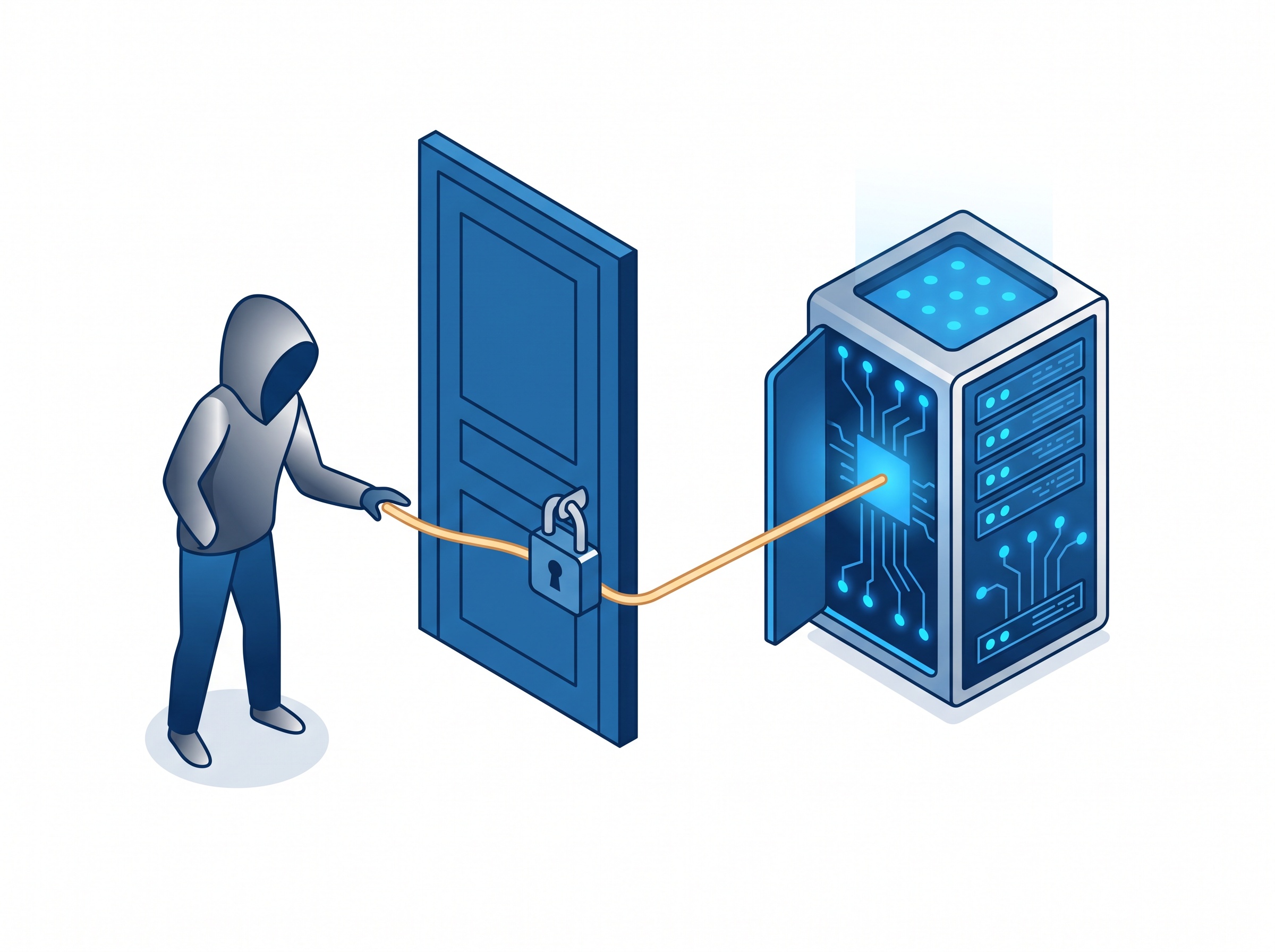
Security advisories are full of jargon, but one word here deserves a plain-language translation: unauthenticated. Many vulnerabilities require an attacker to already have an account, or to trick a logged-in user into clicking something. These do not. An attacker who can simply send a web request to a vulnerable server can attempt to exploit it. That is why PHP’s own team flagged the risk as highest for the most common website setup, and why security firms moved so quickly.
The exposure is broad by design. The flaws affect essentially every way PHP is deployed to serve web traffic — the classic Apache mod_php configuration, the widely used PHP-FPM, the older php-cgi, and newer runtimes such as FrankenPHP and LiteSpeed. PHP’s team singled out mod_php as the highest-risk configuration, which is also one of the most common on inexpensive shared hosting — exactly where many small practice websites live.
How active is the threat?
Reports vary, which is itself a reason not to wait. Qualys notes that Cloudflare has observed attack traffic probing these vulnerabilities, while some outlets say no confirmed compromises have been reported yet. Separately, researchers have published technical write-ups and at least one exploit tool is already circulating. In practice that combination — a leaked early disclosure, public exploit code, and a 9.2 severity — is the profile of a flaw that gets weaponized within days, not months. The honest answer is that the window to patch quietly has already closed.
Why this reaches further into a dental practice than it looks
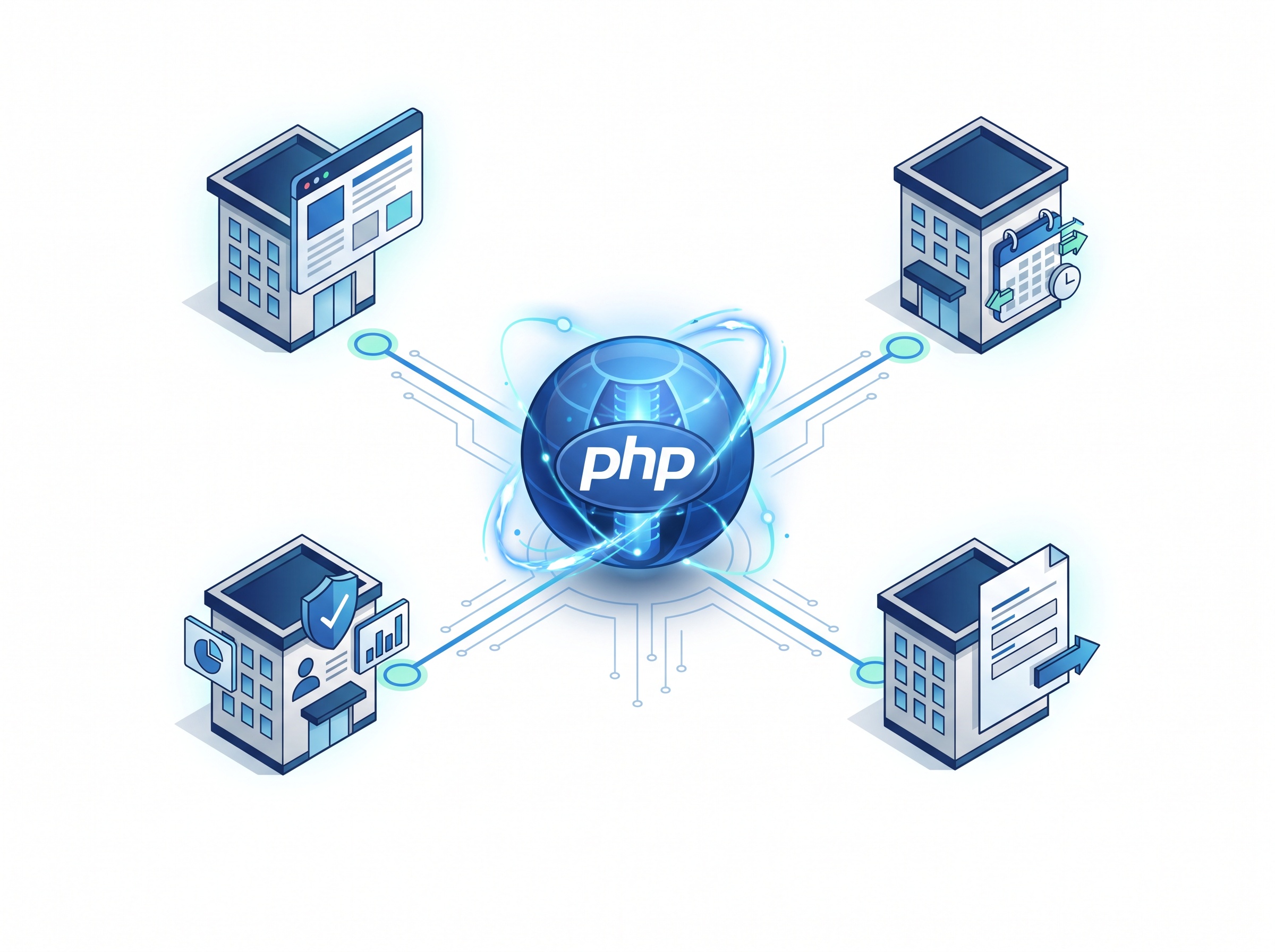
It is tempting to treat the practice website as a brochure that does not matter much. But PHP almost never powers just the public homepage. The same engine typically sits under the online booking or appointment-request tool, the new-patient and contact forms that collect names and phone numbers, and any self-hosted portal where patients retrieve forms or documents. A single unauthenticated RCE on that server is not a defaced homepage — it is an attacker running code on a system that touches patient-submitted information and sits on the same infrastructure as other services.
That is the through-line with the incidents we have covered all month, from the Rank Math PRO supply-chain backdoor to the broader reality that a compromised web presence becomes a foothold. The difference this time is that the flaw is in the foundation, not a component bolted on top — so “we don’t run that plugin” is no protection. If the server runs an unpatched PHP version, it is exposed.
What to do
The good news is that, unlike a self-restoring malware infection, this one has a clean and complete fix: update PHP to a patched version. There is no partial mitigation and no configuration tweak that substitutes for it. The fixed releases are PHP 8.5.12, 8.4.27, 8.3.36, and 8.2.35 — anything below those on each branch is affected.
- Find out what PHP version your website runs, and who controls it. If your site is on managed or shared hosting, the hosting provider patches PHP — your job is to confirm they have, and to move your site to a supported PHP branch if it is running something older than 8.2. If you run your own server or a self-hosted portal, PHP must be updated directly.
- Treat anything below PHP 8.2 as an emergency unto itself. PHP branches older than 8.2 no longer receive security fixes at all — if a practice site is still on 8.1 or 7.x, there is no patch coming and the site needs to be moved to a supported version regardless of PHP2Shell.
- Confirm, don’t assume. After your host or team applies the update, verify the running PHP version actually changed. A ticket marked “resolved” is not the same as a server reporting 8.3.36.
- Keep a clean, recent backup on hand. If a site was exposed during the window before patching, the ability to restore from a known-good backup is what turns a scare into a non-event. Patching closes the door; a backup is how you recover if someone got through first.
The pattern worth noticing
PHP2Shell is a reminder that a practice’s attack surface is not just the laptops and the practice-management server inside the office — it includes the web infrastructure out on the internet with the practice’s name on it, much of which is maintained by someone else or by no one in particular. The practices that will patch this within hours are the ones who already know what their web presence runs on, who maintains it, and how to reach them. The ones still exposed next week will be the ones who have never had to ask. The same discipline that protects the clinical network — knowing your inventory, patching on a managed schedule, and sitting behind a proper business-grade firewall — is exactly what keeps a server-level flaw like this from becoming a breach.

How Compudent Systems can help
At Compudent Systems, we help dental practices across the GTA and Ontario treat their website, booking tools, and patient portals as the connected, patient-facing systems they really are. That means knowing what each one runs on, keeping the underlying software — PHP included — on a supported, patched version through a managed process, and holding clean backups you can actually restore from. If you are not certain what PHP version your practice website is running, or who is responsible for patching it, contact Compudent Systems for a web-presence and security assessment — and let us make sure a flaw in the engine underneath never becomes a breach of your patients’ trust.
Sources & further reading:
- PHP2Shell: Critical PHP vulnerabilities patched, update now! (Help Net Security)
- PHP ships emergency patches for critical PHP2Shell flaws (BleepingComputer)
- PHP2Shell: PHP Patches Two Critical RCE Vulnerabilities, Urges Immediate Updates (Qualys)
Related Reading
- Hacked in Five Hours: The Critical WordPress Flaw (CVE-2026-87902) Your Practice Website Needs Patched Today
- Security Alert: “wp2shell” (CVE-2026-63030) Is a Critical WordPress Core Flaw — Patch Your Practice Website Now
- Critical Apache MINA Vulnerabilities Enable Remote Code Execution Attacks: Urgent Security Alert for Dental Practices