




September 28, 2026 One Compromised Account, 45,853 Patients: The Hawaii Family Dental Breach and the Weak Link You Actually Control
The dental data breaches we have covered lately have mostly happened somewhere else — at a giant distributor, a billing vendor, a referral service — and landed on practices by association. The latest one is different, and that difference is the whole point. A 12-office dental group has begun notifying roughly 45,853 patients that their information was exposed, and the attacker did not need a zero-day or a supply chain to get in. They used a single compromised account.
Hawaii Family Dental disclosed that on July 20, 2026 it detected suspicious activity and determined that an unauthorized individual had used a compromised account to access patient information over roughly a 24-hour window. The long-running ransomware group Qilin — known for stealing data and then threatening to leak it unless paid — has since claimed the attack and posted a sample of the stolen files. For a practice reading this in the GTA or anywhere in Ontario, that is the version of a breach that should keep you up at night, because it started at the one place you can actually do something about.
What was exposed
According to the practice’s notice and its report to regulators, the accessed information included patient names, dates of birth, phone numbers, email addresses, mailing addresses, dental insurance details, and some medical and dental treatment information. Notably, the group has said no Social Security numbers or financial account details were involved, which may limit the fallout.
But do not let the absence of a credit-card number lull you. A date of birth paired with an address, a phone number, an insurer, and a note about the care someone is receiving is exactly the raw material for convincing, targeted fraud — and under HIPAA and Ontario’s PHIPA, treatment information is protected health information whether or not a bank account rode along with it. Its exposure is what triggers notification duties, investigations, and the very real cost of making it right.
The detail that matters: it started with one login
Strip away the ransomware-gang branding and the story is mundane, which is precisely why it is instructive. An account — a legitimate username and password that belonged in the environment — ended up in the wrong hands, and that was enough to walk into the systems holding patient records. There was no dramatic breaking-down of a firewall. Someone knocked using a key that was supposed to be yours.
Accounts fall into attacker hands in a handful of ordinary ways: a password reused from a site that was itself breached, a convincing phishing page that harvests the login, or malware that quietly lifts credentials and even active session tokens off a machine. We have written before about how infostealers can grab a live session cookie and stroll past multi-factor authentication entirely — a reminder that “we have MFA” is a strong start, not a finished sentence.
Why a single account can equal the whole practice
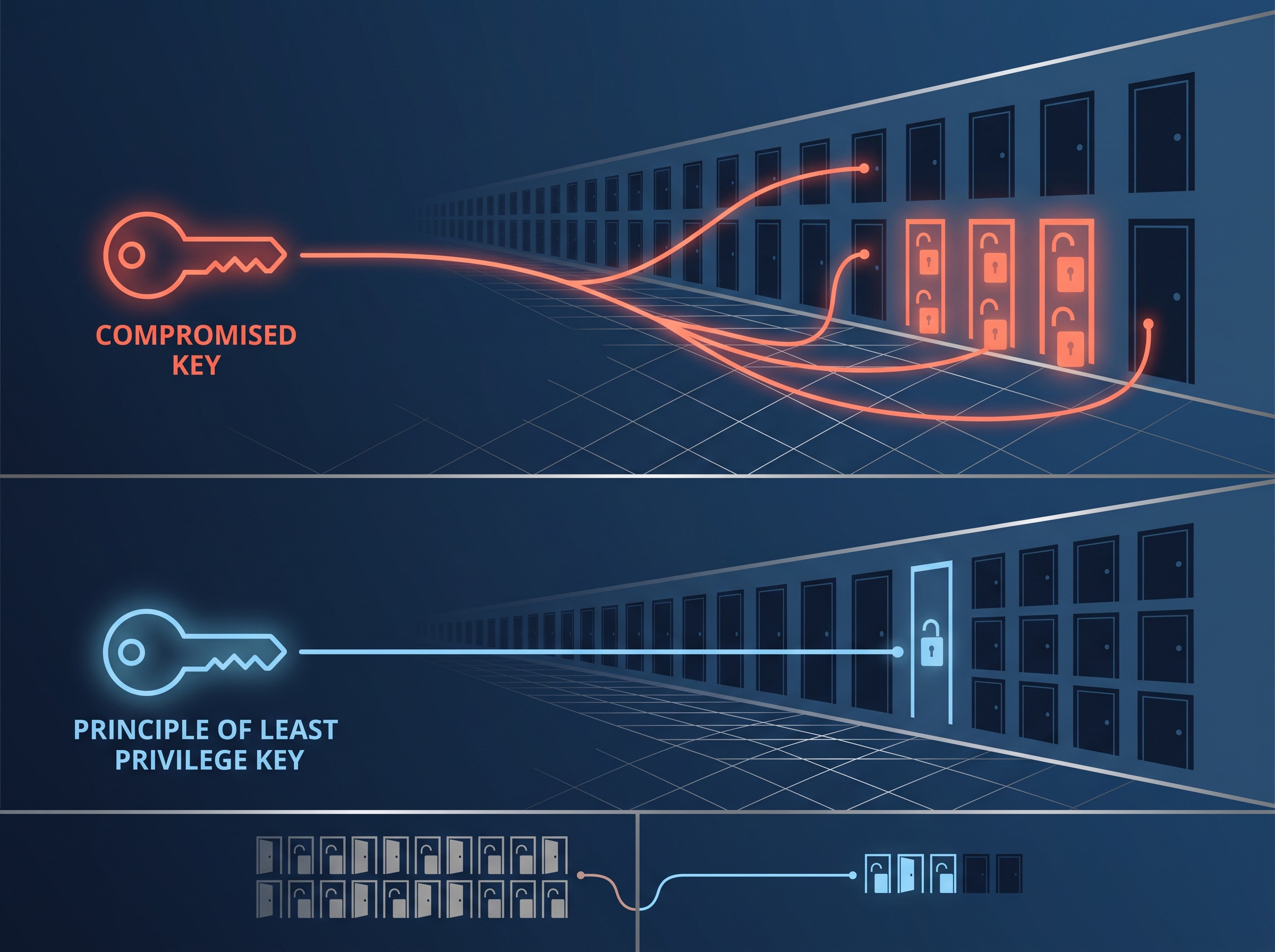
The damage a compromised login can do is decided long before the theft, by one question: how many doors was that account allowed to open? In a lot of small practices, the honest answer is “most of them.” Everyone shares a handful of logins, the front desk account can reach the same data as the office manager, and old staff accounts are never switched off. In that setup, one stolen credential is a master key.
The principle that limits this is called least privilege: each account can reach only what that role genuinely needs, and nothing more. When privileges are tight, a compromised front-desk login is a contained problem instead of a practice-wide catastrophe. When they are loose, the attacker inherits everything the account can touch — which, for patient data, is the ballgame.
The uncomfortable part: you cannot outsource this one
When a breach happens at a supplier — like the McKesson incident that swept up practices through a vendor’s systems — there is a grim kind of comfort in it: the failure was someone else’s, and your options were mostly to react. An account compromise inside your own four walls offers no such alibi. The login was yours to protect, the privileges were yours to scope, and the monitoring that might have caught it sooner was yours to set up. That is uncomfortable — and it is also good news, because it means this is a risk you can materially reduce with decisions entirely within your control.
Exactly what to check this week
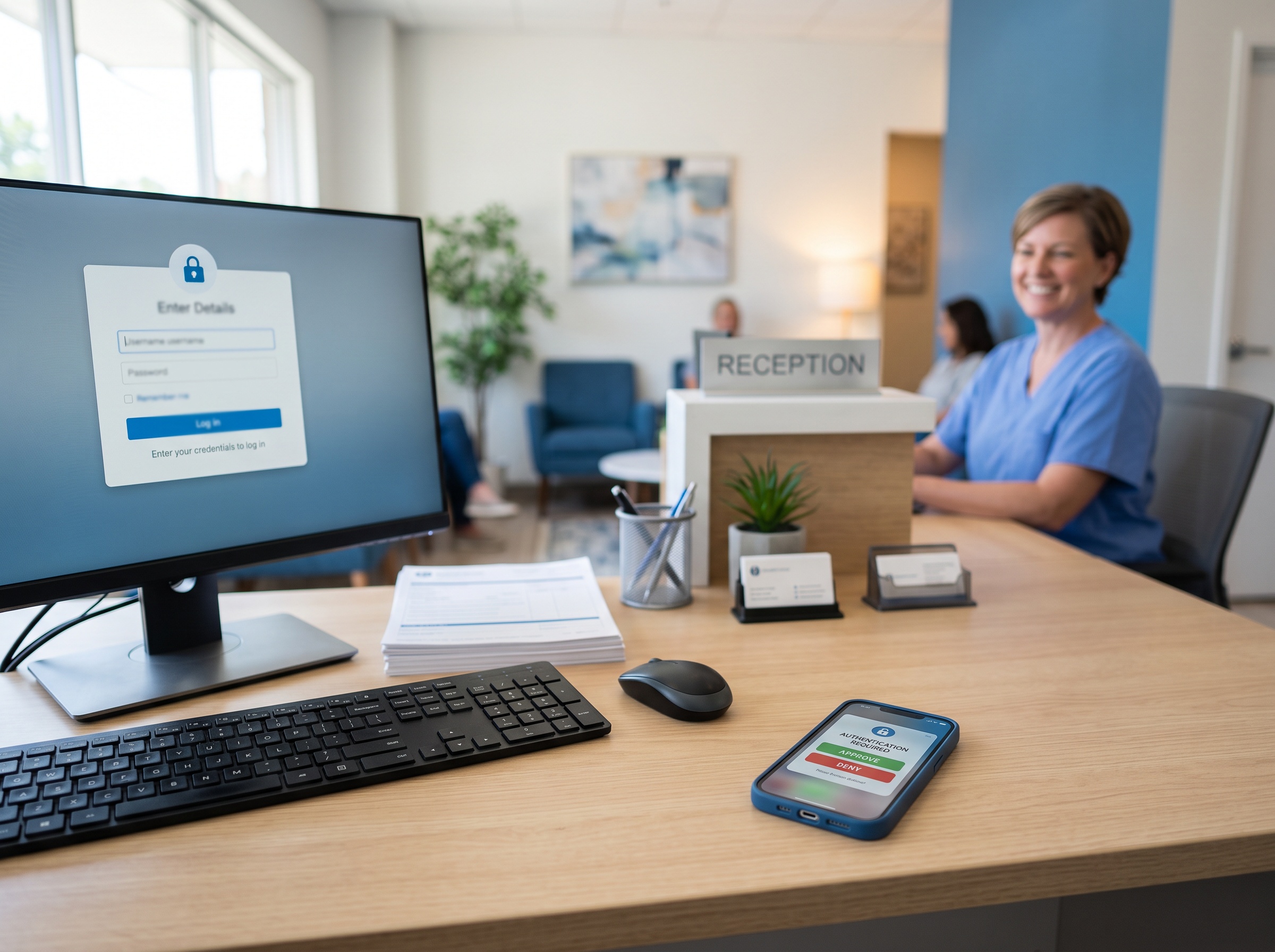
- Turn on multi-factor authentication everywhere it will go. Practice-management software, email, remote access, the patient database, cloud backups — every account that can reach patient data. MFA is the single change that most reliably turns a stolen password into a failed login. It is not perfect, but it defeats the overwhelming majority of credential attacks.
- Kill shared logins and enforce least privilege. Give each staff member their own account, scoped to what their role actually needs. Shared credentials make it impossible to know who did what — and hand an attacker one key that opens every door.
- Deprovision the moment someone leaves. Dormant accounts of former employees and departed contractors are a favourite way in. Build “disable every login, same day” into your offboarding, and audit the current user list for names that no longer belong.
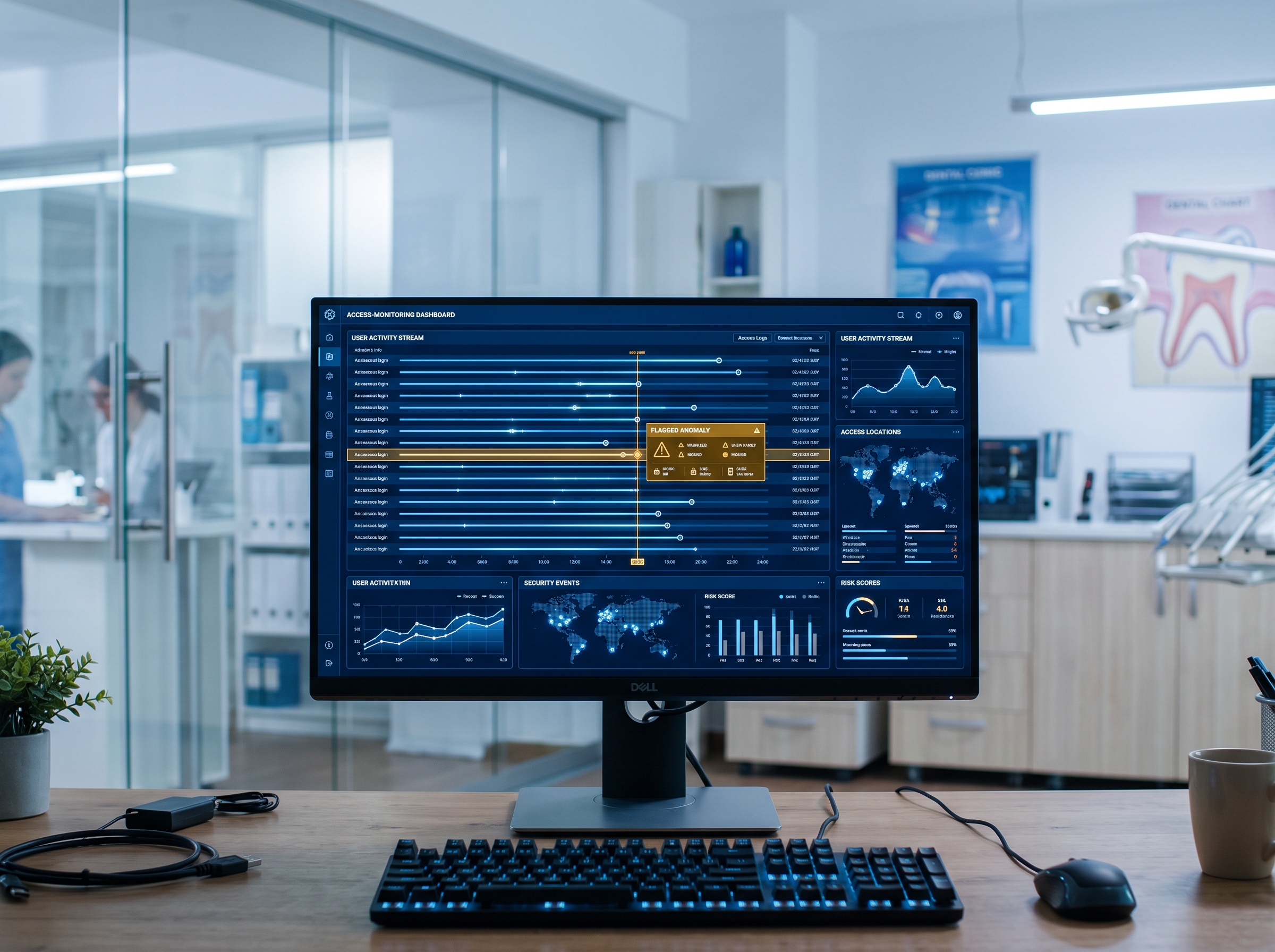
- Make sure someone would actually notice. Hawaii Family Dental detected the intrusion the next day; many practices would not notice for months. Turn on login and access alerting where your systems support it — logins from unusual locations or at odd hours, and unexpected bursts of record access — so an anomaly reaches a human quickly.
- Use unique passwords and a password manager. Reuse is what lets a breach at some unrelated website become a breach at your practice. A password manager makes long, unique passwords for every account the path of least resistance rather than a chore.
- Have a plan for the bad day. Even a well-run practice can be hit. Knowing in advance how you would investigate, contain, notify, and keep seeing patients is the difference between a controlled response and a scramble — the same reasoning behind having a downtime and business-continuity plan ready before you need it.
The habit underneath all of it
Qilin, the group claiming this attack, does not hand-pick prestigious targets. Like most of today’s ransomware operators, it hunts for whatever is easy — smaller organizations, outdated systems, loose access — which quietly demolishes the old comfort that a modest practice is too small to bother with. You are not too small; you are, to an opportunist, potentially just easy. The practices that ride this out are not the ones with the biggest security budget. They are the ones where every login has an owner, MFA is on, privileges are tight, and someone is watching.
Where Compudent fits
Most dental offices do not have someone whose job is to audit who can log into what, confirm MFA is switched on across every system that touches patient data, and make sure a strange login at 2 a.m. actually reaches a person. That is the gap we close. Compudent Systems helps dental and medical practices across the GTA and Ontario lock down accounts and access — enforcing multi-factor authentication, scoping permissions to the principle of least privilege, cleaning up dormant and shared logins, and putting monitoring in place so an intrusion is caught in hours, not months. If you are not certain who has access to your patient data today, or whether MFA is truly on everywhere it should be, reach out to Compudent for a quick account-security assessment. It is a short conversation now, or a notification letter to 45,000 patients later.

Sources & further reading:
- Qilin claims 40k data breach at Hawaii Dental Group
- Hawaii Family Dental – Notice of Data Security Incident