




July 28, 2026 News Alert: The MCBS Billing Breach and the Rise of Extortion-Only Attacks on Healthcare Vendors
Your practice can lock down every workstation, patch every server, and train every team member to spot a phishing email, and still watch its patients’ records surface on a criminal leak site, all because of a company you outsource your billing to. That is the hard lesson behind the newly disclosed breach at MCBS, a US medical billing and revenue-cycle-management firm, and it should give every dental practice that hands off claims and statements a reason to pause.
What actually happened at MCBS
MCBS, LLC, an Augusta, Georgia healthcare management and revenue-cycle-management company, has confirmed a cybersecurity incident affecting 1,261,464 individuals. Intruders had unauthorized access to its network over a short window in late September 2025, and MCBS detected the activity around September 25. What followed is the part that matters most: a lengthy forensic investigation and document review stretched into the following spring, and it was only around late May 2026 that the company confirmed sensitive files had likely been taken.
The attackers did not lock anything up. A group calling itself PEAR, short for Pure Extortion And Ransom, claimed responsibility, said it exfiltrated roughly three terabytes of data, and published it after a ransom demand went unpaid. Seven healthcare providers relied on MCBS to handle their billing, and their patients are the ones now exposed.
Why a billing company’s breach is a dental problem
Very few dental practices process every insurance claim, statement, and payment entirely in-house. Billing services, revenue-cycle-management firms, and claims clearinghouses quietly do that work in the background, and to do it they need names, dates of birth, insurance details, treatment codes, and often more. Under both HIPAA and Ontario’s PHIPA, those companies are handling protected health information on your behalf. In HIPAA terms they are business associates; in PHIPA terms they are agents or service providers acting for you as the health-information custodian.
That relationship does not shift the responsibility away from the practice. When a billing vendor is breached, it is still your patients whose data is exposed, your name attached to the breach notification, and your front desk fielding the anxious phone calls. The MCBS incident is a textbook example: the seven affected clinics did nothing technically wrong, yet their patients paid the price.

The quiet shift to extortion-only attacks
For years, the mental model of a healthcare cyberattack has been ransomware: files get encrypted, systems go dark, and a countdown timer demands payment for a decryption key. That noise is often what tips a practice off that something is wrong. PEAR represents a colder, harder-to-catch approach that is spreading fast across the threat landscape.
Extortion-only groups skip encryption entirely. They break in, move quietly, copy as much sensitive data as they can, and leave, then contact the victim with a simple threat: pay, or we publish everything. Because nothing is locked and no systems crash, there is no dramatic alarm. A practice or vendor can look completely healthy on the surface while terabytes of records walk out the door. This is precisely why detection, logging, and data-access monitoring now matter more than the ability to restore from backups alone.
What was exposed, and why it stings
The categories of data caught up in the MCBS breach read like a fraudster’s shopping list: names, addresses, dates of birth, Social Security numbers, medical histories, diagnosis and treatment information, health-plan and beneficiary details, and insurance policy and subscriber numbers. This is not the kind of information a patient can simply reset. A leaked password can be changed in seconds; a date of birth, a diagnosis, or a government identifier follows a person for life and fuels identity theft, insurance fraud, and targeted phishing for years.

Six steps every dental practice should take now
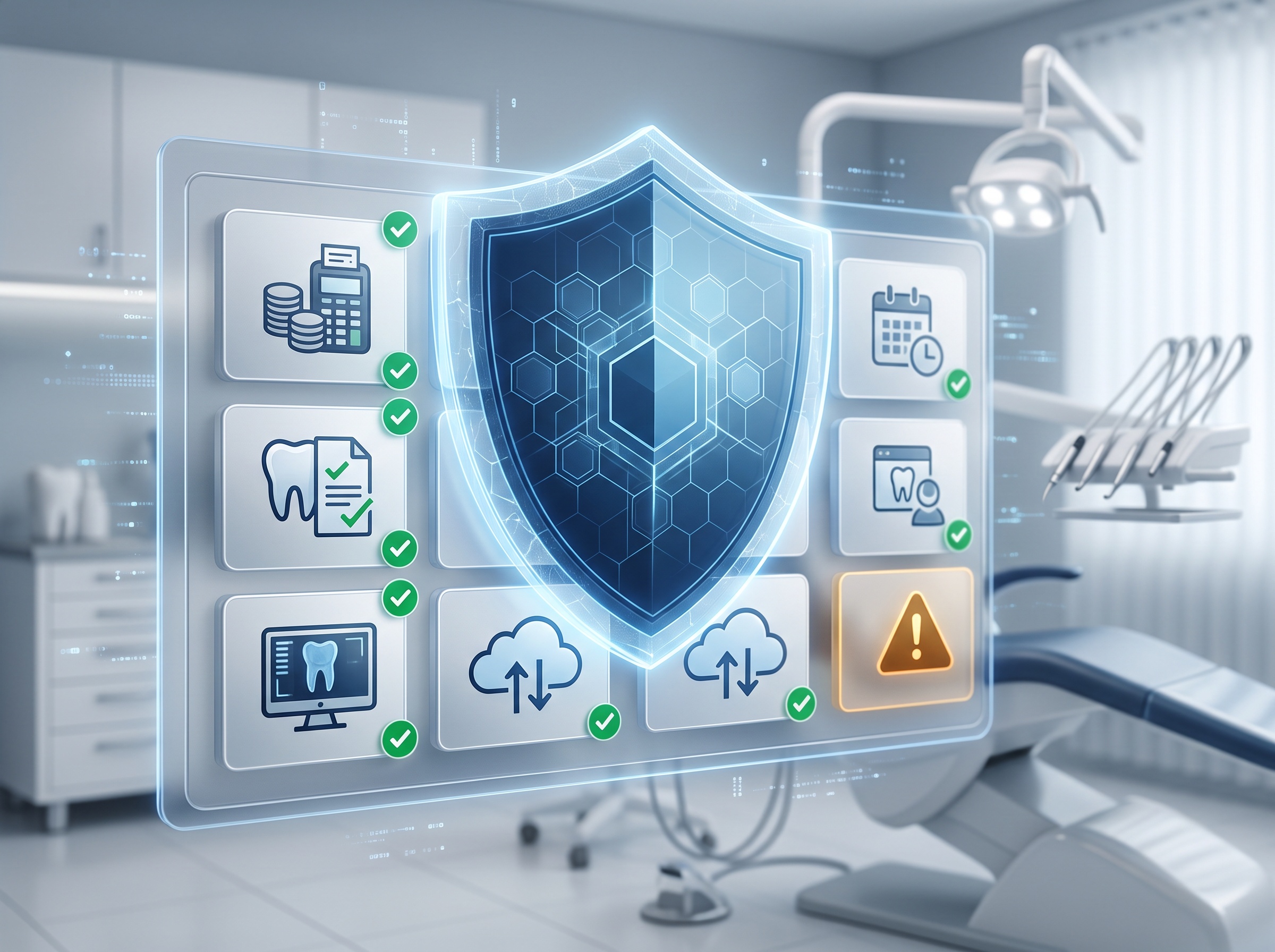
You cannot patch a vendor’s servers, but you can control how much trust and exposure you extend to them. Start here:
1. Inventory who holds your data. List every outside company that touches patient information, including billing and RCM firms, claims clearinghouses, imaging and practice-management software, and cloud backups. You cannot manage a risk you have not written down.
2. Get the agreements in writing. Every business associate should have a signed BAA under HIPAA, and PHIPA-appropriate written agreements should govern any provider that handles your patients’ records, spelling out safeguards and breach-notification duties.
3. Apply the minimum-necessary rule. A billing vendor rarely needs a patient’s full clinical history to submit a claim. Push to share only the fields required for the job, so a vendor breach exposes less.
4. Ask hard questions about detection. Because extortion-only attacks are silent, ask vendors how they monitor for unusual data access and how quickly they would notify you. MCBS took roughly eight months to confirm what was taken.
5. Watch your own edges too. Enforce multi-factor authentication, network segmentation, least-privilege access, and detailed logging so that a compromise of any connected system is caught early rather than months later.
6. Have an incident-response plan ready. Know in advance who you call, how you notify patients, and what your regulatory obligations are, so a vendor breach becomes a managed event instead of a scramble.
What PHIPA and HIPAA expect of you
Regulators on both sides of the border take the same basic position: outsourcing the work does not outsource the accountability. Under PHIPA, a health-information custodian remains responsible for personal health information handled by its agents and service providers, and it must take reasonable steps to protect that information. HIPAA-covered practices carry parallel duties around business associates and breach notification. Choosing a vendor with weak security, or failing to put proper agreements and oversight in place, is a compliance gap that lands on the practice, not just the vendor. Documented due diligence, clear contracts, and ongoing monitoring are how you demonstrate you took those obligations seriously.

The MCBS breach is a reminder that in modern dentistry your security perimeter extends to every company you share patient data with, and that today’s attackers may never trip an alarm on the way in or out. Compudent Systems helps dental practices across the GTA and Ontario map exactly where their patient data lives, evaluate the security of billing and other third-party vendors, put PHIPA-appropriate agreements and BAAs in place, and harden their own networks with monitoring, segmentation, and tested incident-response plans. If you are not confident about how your billing partners protect your patients’ information, contact Compudent Systems for a vendor-risk and privacy assessment, and let us help you close the gap before someone else finds it.
Sources & further reading:
- MCBS Announces Cybersecurity Incident Impacting 1.26M Individuals – The HIPAA Journal
- Data breach at medical billing firm MCBS affects 1.26 million people – BleepingComputer
- MCBS Data Breach Affects 1.2 Million Individuals – SecurityWeek
Related Reading
- 284 Million Records Claimed at the Supplier: What the McKesson Breach Means for Your Dental Practice
- Your Billing Company Is on a Leak Site: The eAssist/Direwolf Attack and Outsourced-RCM Risk
- Major UK Biobank Data Breach: 500,000 Health Records Sold on Chinese Platforms – Critical Warning for Dental Practices