



November 24, 2026 Java4Shell: A Critical Flaw in Software You May Be Running Without Knowing — What CVE-2026-114938 Means for Your Dental Practice
On 17 November 2026, Oracle and the OpenJDK project shipped an urgent fix for a flaw that security researchers have nicknamed Java4Shell, tracked as CVE-2026-114938. The firm that found it, Calif, says a vulnerable system can be made to run an attacker’s code with no login required. Within hours, both the U.S. Cybersecurity and Infrastructure Security Agency (CISA) and the Canadian Centre for Cyber Security — in its advisory AL26-029 — told organizations to patch immediately.
For a dental practice, the instinct is to assume this is somebody else’s problem: “We don’t run Java.” That is the trap. Java is one of the most quietly ubiquitous pieces of software on the planet, and it hides inside systems you would never label as “Java” at all. Here is what the flaw actually is, who is genuinely at risk, and the short, practical list of what to do this week.
What Java4Shell actually is
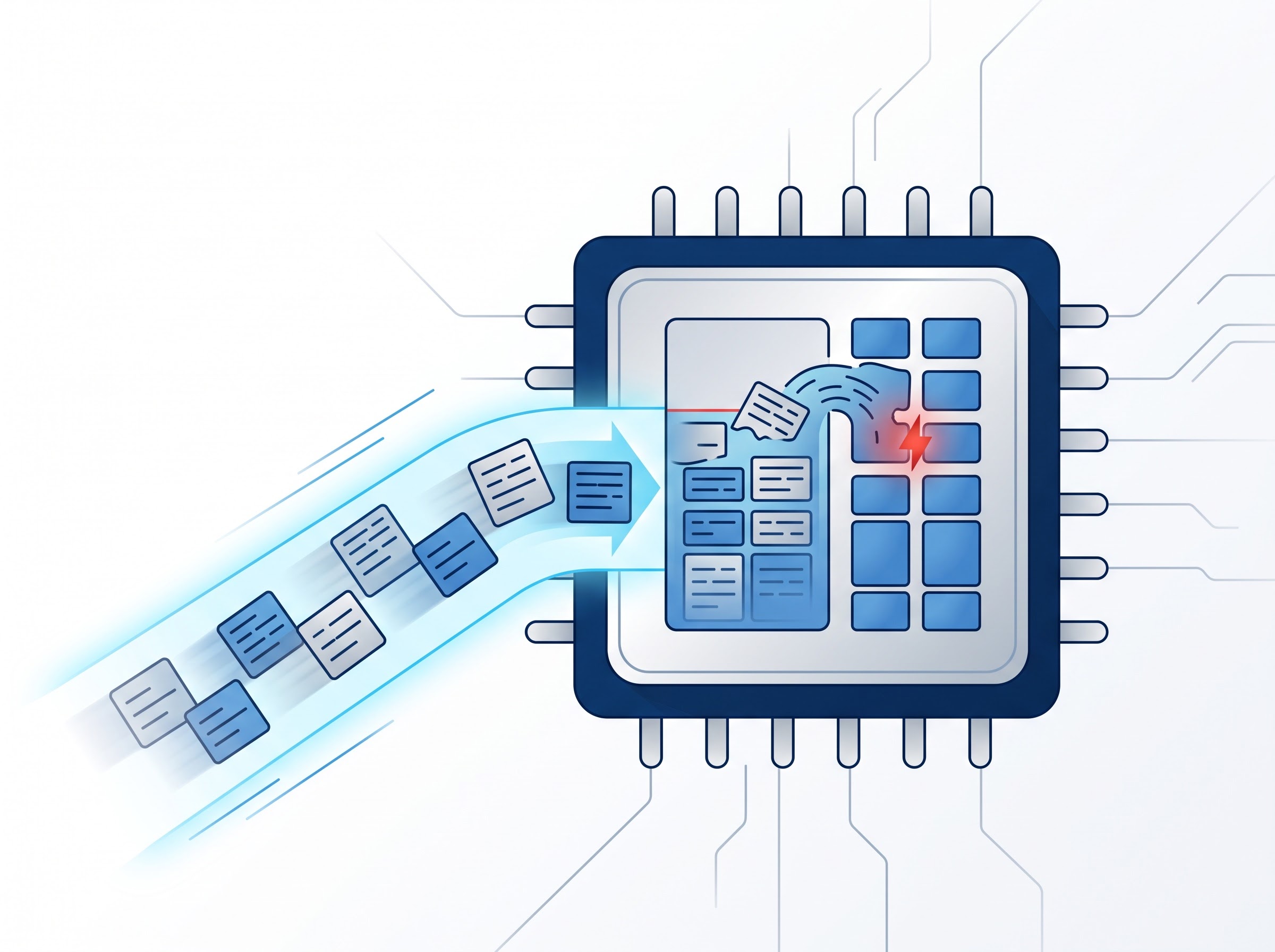
Strip away the branding and CVE-2026-114938 is a memory-corruption bug in the part of Java that decodes Base64 — a common, boring format that applications use constantly to move things like file uploads, tokens and login details around. The flaw lives in a performance shortcut: to decode Base64 faster, modern Java uses a hardware-accelerated path on certain processors. Feed that path a specially crafted blob of data and it overruns a memory buffer, and from that overflow a skilled attacker can reach remote code execution without authenticating.
Oracle scores it 8.1 on the CVSS 3.1 scale and rates its attack complexity as high; Calif puts it at 9.2 under the newer CVSS 4.0. “High complexity” is not a reason to relax — it means the exploit is fiddly to build, not that the consequence is small. The consequence, when it lands, is an attacker running commands on your server.
Who is actually at risk — the conditions that matter
This is where accuracy beats panic. Three conditions have to line up for a system to be exploitable, and knowing them tells you where to look:
- It runs an affected Java version — broadly OpenJDK 17 through 27 — that has not yet received the November 17 fix.
- It runs on an x86-64 processor that supports the AVX-512 instruction set (the feature behind that fast Base64 shortcut). Hardware without it is not affected by this particular path.
- An application on it actually passes untrusted data to the vulnerable Base64 routines — typically something web-facing or network-facing that accepts outside input.
So no, not every machine with Java is a sitting duck. But those conditions are common in exactly the kind of back-office server software a practice depends on. Researchers have already pointed to widely used Java applications — the sort used for internal web portals, automation and identity — as exploitable, and noted there is no single universal exploit: each application needs its own, which slows mass attacks but does not stop targeted ones.
Why this is a dental-practice problem at all
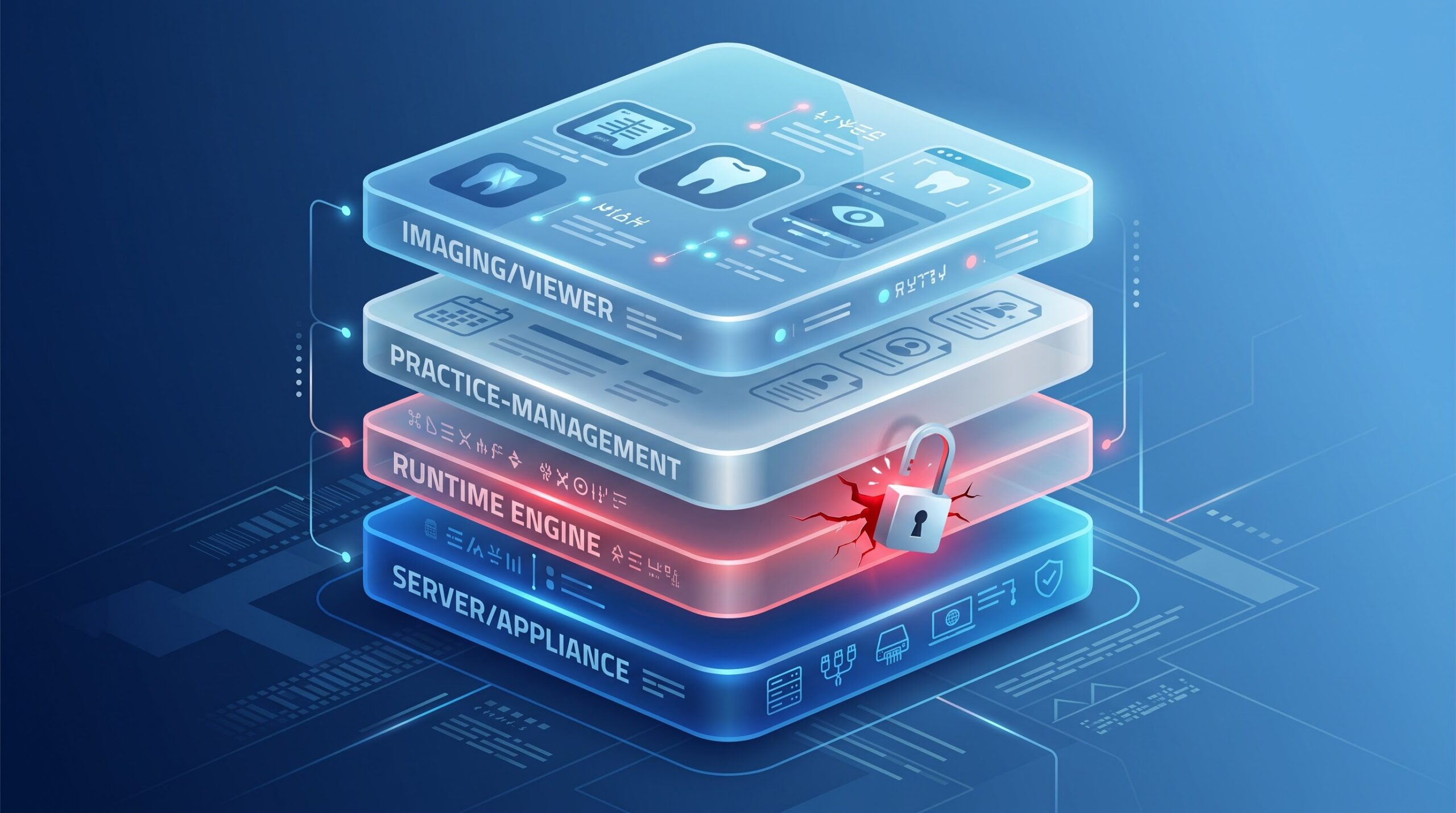
The reason Java4Shell belongs on your radar is the same reason it is dangerous everywhere: you rarely know Java is there. It sits underneath things you bought for an entirely different purpose. In a typical practice it can be embedded in imaging and PACS middleware, in the integration or “bridge” engines that shuttle data between your practice-management software and other systems, in the companion apps on a network-attached storage (NAS) box, in server-side components of vendor platforms, and in the management consoles of appliances humming away in a closet.
This is the recurring lesson of modern breaches: you cannot protect code you do not know you run. We made exactly this argument when a flaw surfaced in a data-handling library buried inside healthcare software that nobody names, and the principle is identical here. A vulnerability in a shared, invisible layer is only as manageable as your inventory of where that layer lives. If no one at the practice can say with confidence which systems contain a Java runtime, the honest answer to “are we exposed?” is “we don’t know” — and that is the gap to close first.
The current threat picture — measured, not hysterical
As of the days following disclosure, the threat-intelligence community described active interest but not yet a confirmed catastrophe. GreyNoise reported scanning and exploitation attempts against the flaw but had not confirmed a successful compromise against its sensors, and while a working exploit exists in private hands, there was no confirmed mass exploitation in the wild. That is precisely the window in which patching is cheap and effective — before a reliable, packaged exploit circulates. The pattern is familiar from other recent alarms, from a Synology NAS flaw CISA flagged as actively exploited to a critical Linux kernel bug being scanned for across the internet: the practices that fare well are the ones that patch during the quiet window, not after the noise starts.

What to do this week
You do not need to become a Java expert. You need to run a short, deliberate sequence:
- Inventory where Java runs. Ask your IT provider — or your own team — to identify every server, workstation, NAS and appliance that contains a Java runtime, and which version. This is the step most practices skip and the one that makes every later step possible.
- Apply the fix. Oracle released corrected Java builds on November 17; many Linux distributions and Java vendors followed. Patch affected systems to a fixed version, prioritising anything network-facing.
- Use the interim mitigation if you cannot patch at once. Security vendors note that disabling the hardware-accelerated Base64 decoder forces Java to fall back to its safe, built-in decoder — closing this attack path at a small performance cost until a proper patch is scheduled.
- Press your vendors. For any practice-management, imaging, backup or appliance product, ask the supplier directly: does your product bundle an affected Java runtime, and have you shipped a fixed build? A vendor that cannot answer quickly is itself a finding.
- Record it. Fold this into your HIPAA and PHIPA security risk analysis as a documented item — what you found, what you patched, and what you are tracking — so that your diligence is written down, not just remembered.
None of this is exotic. It is the unglamorous discipline of knowing your own systems and acting inside the window before a flaw becomes a weapon.
The quiet-software problem is not going away
Java4Shell will be patched and, with luck, largely forgotten. The lesson it leaves behind will not be: the software that runs your practice is built from shared, invisible components, any one of which can become tomorrow’s emergency. The practices that handle these events calmly are not the ones with no Java — they are the ones who know exactly where it lives and can act in an afternoon rather than a fortnight.
At Compudent Systems, building and maintaining that kind of inventory — knowing which runtimes, libraries and appliances sit beneath your imaging, practice-management and backup systems, and keeping them patched before a headline forces the issue — is part of treating a dental office as the connected system it has become. If you cannot say with confidence where Java, or any other shared component, runs in your practice, contact Compudent Systems for a vulnerability and patch-readiness review, and we will help you find out before an attacker does.
Sources & further reading:
Related Reading
- A Zero-Day Is Hitting Healthcare in Software Nobody Names: The FastJson Flaw (CVE-2026-16723) and Why You Can’t Protect Code You Don’t Know You Run
- A Fake Job Offer, a Windows Kernel Rootkit: The Lazarus Zero-Day (CVE-2026-68820) and What It Means for Your Dental Practice
- A Forged Login Walks Straight Into SharePoint: What the Actively Exploited CVE-2026-55040 Auth Bypass Means for Dental Practices