



November 23, 2026 Why Attackers Hit the Dental Group, Not Your Office: The November Breach Wave and the Aggregation Risk Behind It
Within a single stretch of November, the dental industry supplied a run of ransomware headlines that are worth reading together rather than one at a time. Around 16 November 2026, a ransomware group calling itself Curious Worm claimed an attack on Interdent, Inc., a major player in the U.S. dental sector, with roughly 850GB of data said to have been leaked. In the same window, Access Dental Management of Texas disclosed a breach affecting about 341,049 individuals — including Social Security numbers and medical records — and Park Dental Partners Inc. was reported to the Texas Attorney General as affecting roughly 1,276,335 people.
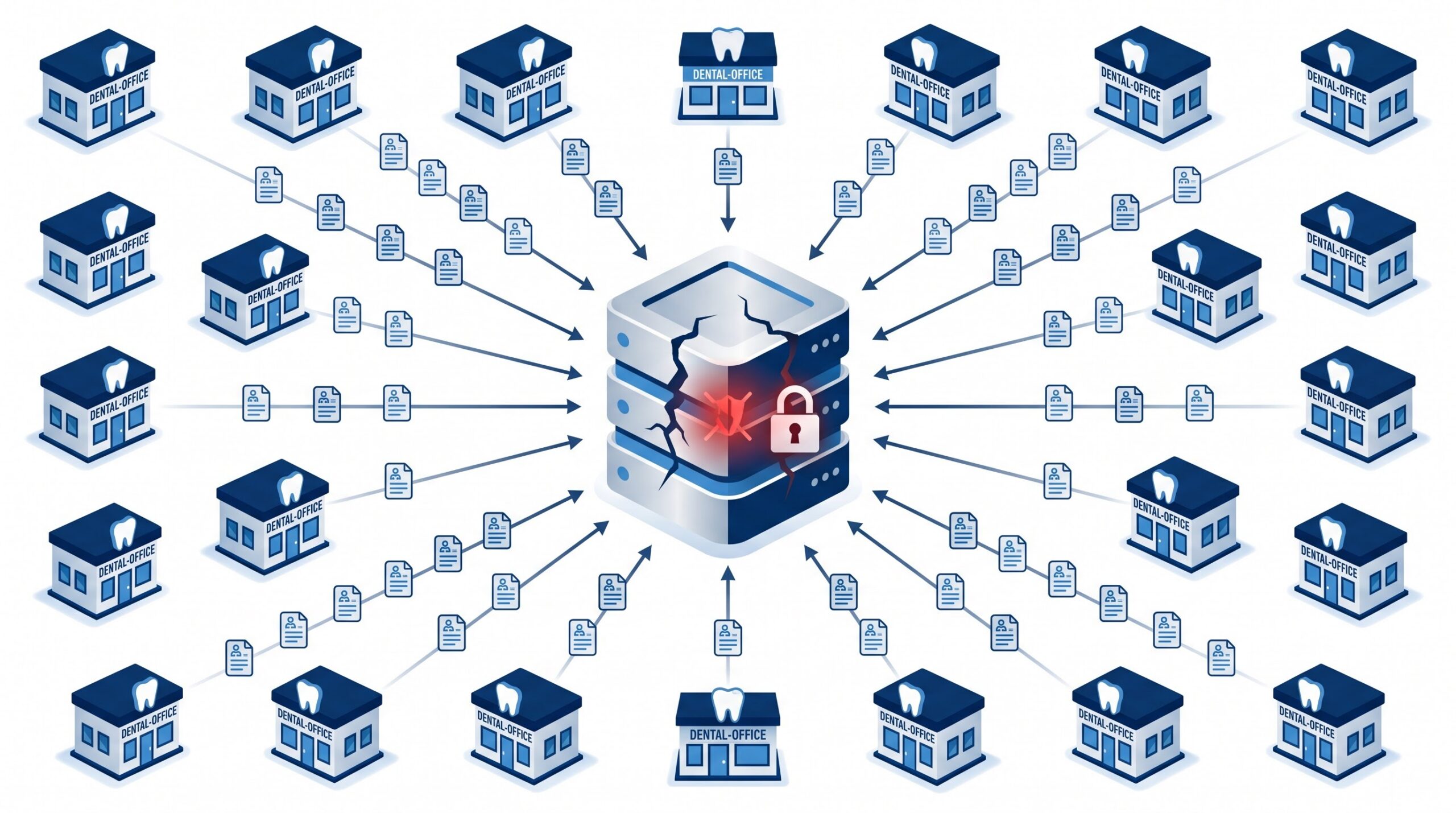
Three breaches, and not one of them is a corner dental office that forgot to patch a laptop. Each is an organization that sits behind many practices — a management company, a service organization, a group. That is the thread, and it matters, because it tells you where the real target has moved. For a single practice owner in the GTA, the lesson is not “another breach happened.” It is that the most dangerous place your patient data can sit is in a pool with everyone else’s.
Three breaches, one pattern: the target moved up the chain
A lone dental office holds the records of a few thousand patients. Breach it and a criminal has a modest, hard-won haul. A dental service organization, a practice-management company or a shared platform holds the records of dozens or hundreds of offices at once. Breach that, and the same effort yields hundreds of thousands of records — or, as the Park Dental Partners figure suggests, well over a million. The November cluster is not a coincidence of careless clinics. It is attackers following the data to where it is densest.
This is why the individual-practice framing of “are we a target?” is increasingly beside the point. You may be a small target on your own, but the organizations you connect to are enormous ones, and when they fall, your patients fall with them. The numbers in these disclosures are large for one reason: concentration.
Why aggregated patient data is a jackpot
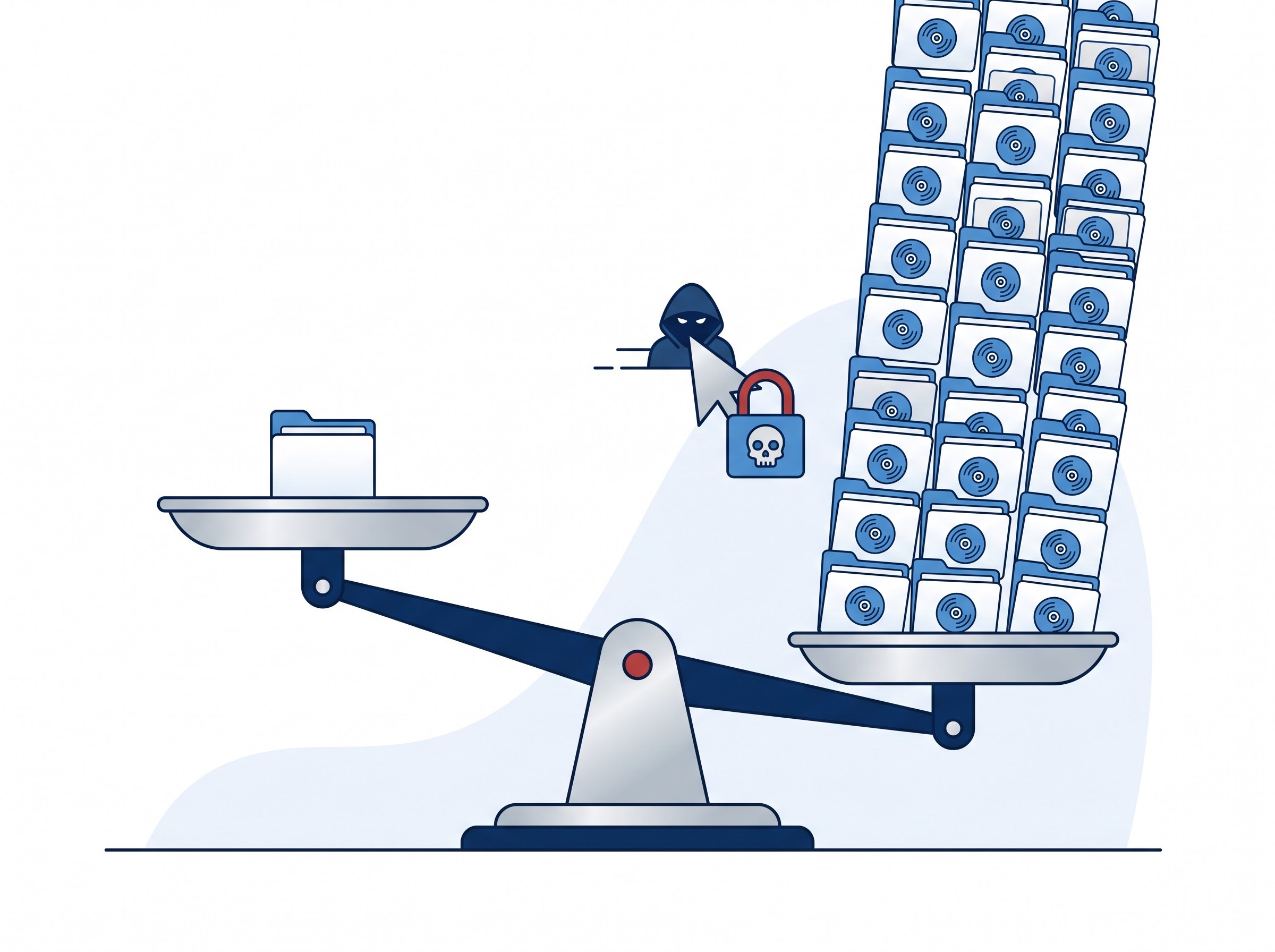
Ransomware is a business, and its operators do basic arithmetic. Compromising one office and compromising one management company cost roughly the same effort — the same phishing email, the same stolen credential, the same unpatched appliance — but the payoff differs by orders of magnitude. More records mean more leverage to extort, more identities to sell, and more downstream practices who will feel the pressure to pay to make the disruption stop. Aggregated health data is simply worth more, so it draws more skilled and more determined attackers.
Healthcare has seen this movie before in its largest incidents: the biggest exposures of patient data in recent memory have tended to come not from clinics but from the processors, clearinghouses and platforms sitting behind them, where a single compromise spills records from thousands of practices at once. We looked at exactly this dynamic when a cloud vendor breach exposed millions of records without the attacker ever touching the company’s own network. The dental-group wave this month is the same principle wearing dental scrubs.
You can be exposed even as an independent practice
It is tempting to read all of this as a problem for big corporate dentistry and not for an independent office. That comfort is thinner than it looks. Independence in the waiting room does not mean independence in the data. Your patient records are very likely pooled with other practices’ records through at least one of these channels: a cloud practice-management or imaging platform that hosts many clinics on shared infrastructure; an outsourced billing or revenue-cycle company that processes claims for a whole roster of offices; a group, DSO or management-services affiliation that centralizes IT, HR or patient communications; or a recall, booking or marketing service used across an entire region.
Each of those is an aggregation point, and in each case the uncomfortable legal reality is the same: the responsibility does not travel with the data. Under HIPAA, a company that handles protected health information on your behalf is a Business Associate, and you are expected to have a Business Associate Agreement binding them to protect it — and a breach on their side is still a reportable breach for you. Ontario’s PHIPA frames this through agents and service providers, but the accountability lands in the same place: it remains your patients’ information, and “the group’s system was hit” is not a defence to a patient or a regulator.
How to find and shrink your aggregation points
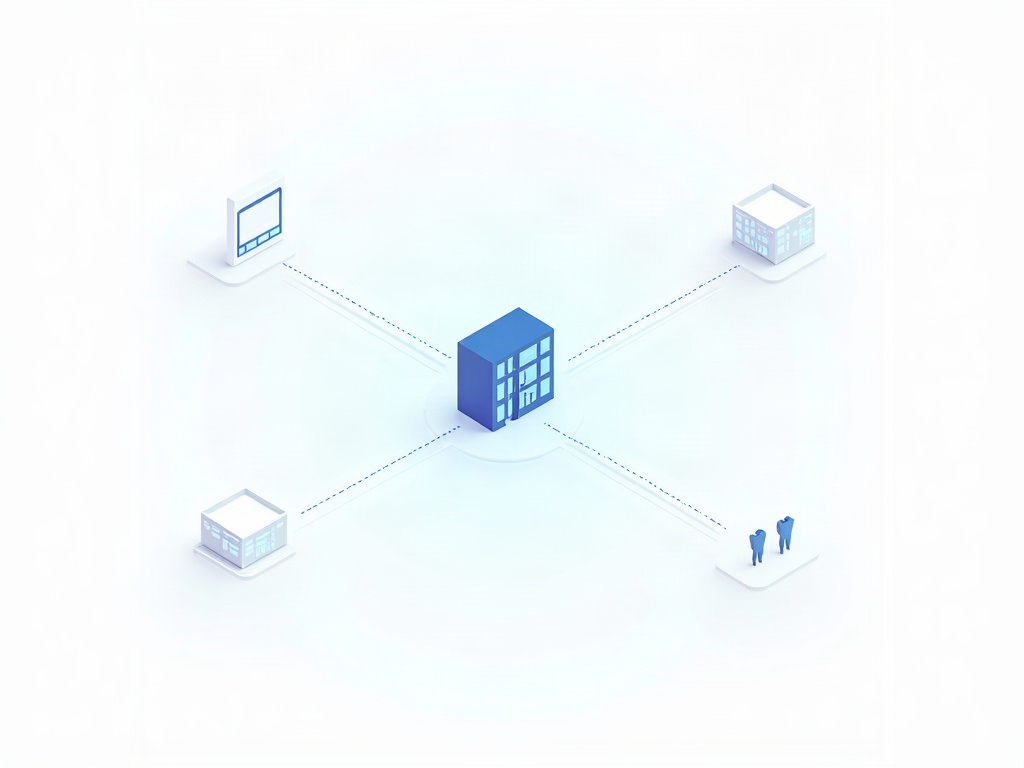
You cannot manage an exposure you have never written down, so the first task is deliberately unglamorous: list every outside organization that stores, processes or can see your patient data, and note roughly how many other practices sit in that same pool. The platforms and partners that aggregate the most records are the ones that deserve the most scrutiny, precisely because they are the most attractive targets. From that map, a short set of moves does most of the work:
- Confirm a signed, in-date Business Associate Agreement (or a PHIPA-equivalent written commitment) exists for every aggregation point. A missing BAA is the most common gap and the first thing an auditor asks for.
- Ask each one the blunt questions: how is our data encrypted and separated from other clients’, do you enforce multi-factor authentication, have you been breached, and how fast will you tell us if you are?
- Practise data minimization — give each platform only the records and fields it genuinely needs, so a breach there exposes less of your patient base.
- Ask whether an independent security attestation exists (a SOC 2 report or ISO 27001 certification), especially for the largest pools.
Then prepare for the day one of them fails anyway, because resilience is the part you fully control. Know who you would notify and how you would keep seeing patients if a shared platform went dark. That is where your own independent, tested backups of the database you cannot afford to lose prove their worth — a partner’s outage should never be the moment you discover you had no copy of your own data. And aggregation risk belongs squarely inside your annual HIPAA security risk analysis, as one of its named categories rather than an afterthought.

A short aggregation-risk checklist
If you do nothing else this quarter, run your practice against these five questions:
- Do we have a written list of every group, platform or company our patient data is pooled with?
- For each one, roughly how many other practices share that same system — and is there a signed, current BAA or PHIPA-equivalent agreement?
- Does each pool hold only the minimum data it needs, encrypted and behind multi-factor authentication?
- Do we know how, and how fast, each partner would notify us of a breach on their side?
- Could we keep operating and meet our notification duties if the biggest of these pools was hit tomorrow?
Any “no” or “not sure” on that list is not a failure — it is a to-do item, and a far cheaper one to settle on a quiet week than in the middle of someone else’s breach.
At Compudent Systems, mapping where a practice’s patient data really lives — including the groups, platforms and processors that pool it with everyone else’s — and making sure the right agreements, safeguards and backups are in place is part of treating a dental office as the connected system it has become. If you have never traced which outside organizations hold your patient records, or cannot say how many other practices share those systems, contact Compudent Systems for an aggregation and third-party risk review, and we will help you see the whole picture — not just the part inside your own four walls.
Sources & further reading:
Related Reading
- Ransomware Is Now a Patient-Safety Issue: What a 38% Hospital Mortality Study Means for Your Dental Practice
- 284 Million Records Claimed at the Supplier: What the McKesson Breach Means for Your Dental Practice
- Two Dental Groups on Leak Sites in One Week: What It Means When Your Practice’s Name Appears on a Ransomware Blog