



August 26, 2026 What a Data Breach Actually Costs a Dental Practice: The Bill Behind the Headline
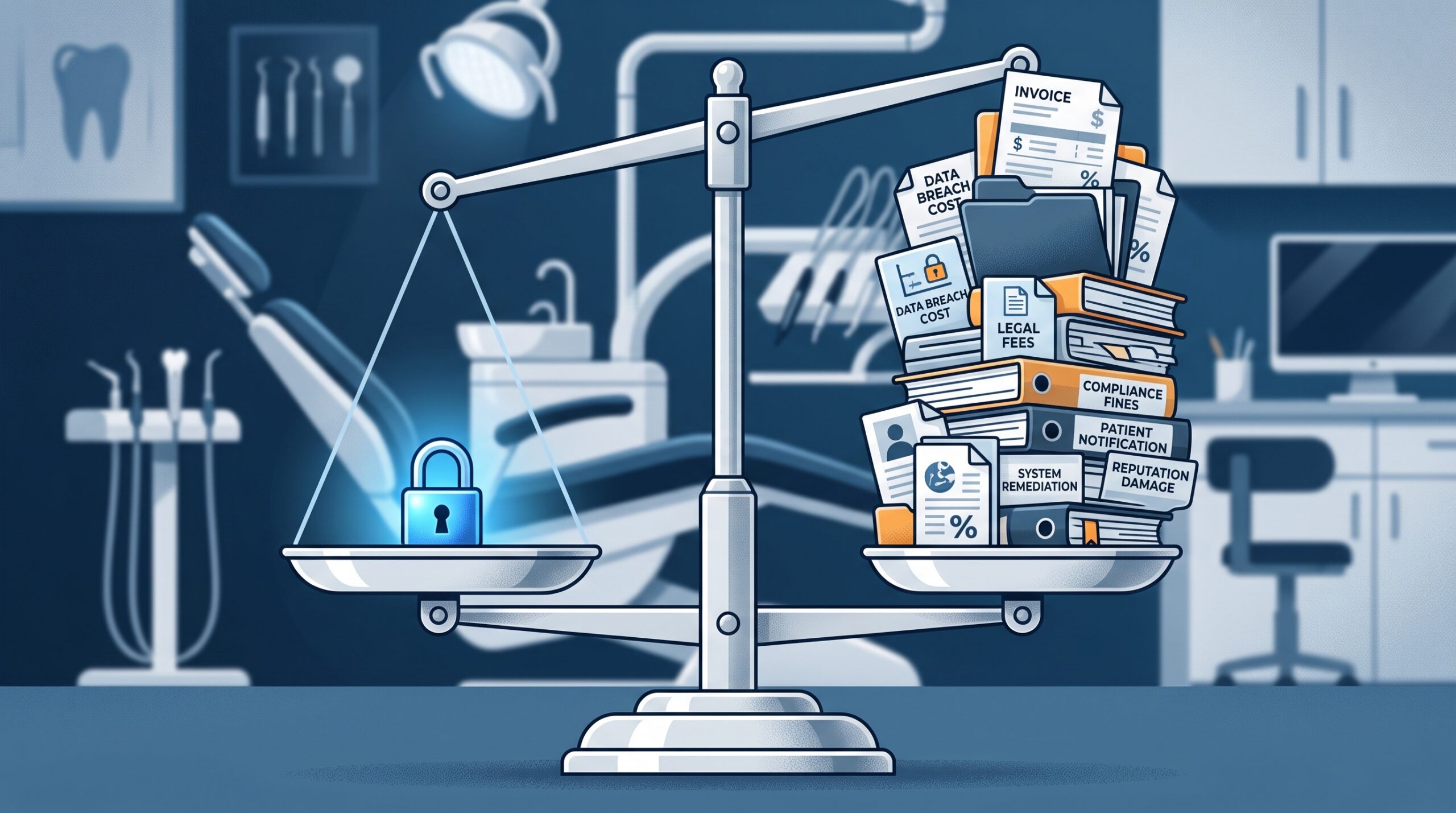
When a dental clinic or hospital lands in the news for a data breach, the story is written in a single dramatic sentence: attackers stole the records of tens of thousands of patients. Then the headline moves on. The invoice does not. It arrives quietly, in pieces, over the following year – a forensics bill here, a lawyer’s retainer there, a mailing house’s charge for tens of thousands of notification letters, and eventually a settlement. This August, Central Maine Healthcare agreed to a roughly $1.3 million class-action settlement over a data breach, with affected patients eligible to claim up to $5,000 each. That number is not the ransom the attackers asked for. It is what the breach cost after the attackers were long gone. For a dental practice, the lesson is the one that never makes the headline: the breach is the cheap part.
The breach cost is a stack of bills, not a single number
There is a persistent myth that a cyber incident has one price – the ransom – and that a practice with good backups simply refuses to pay and walks away clean. The ransom, if there even is one, is a single line on a long invoice. The real cost of a patient-data breach is the sum of several independent bills, each of which arrives whether or not a single file was ever encrypted:
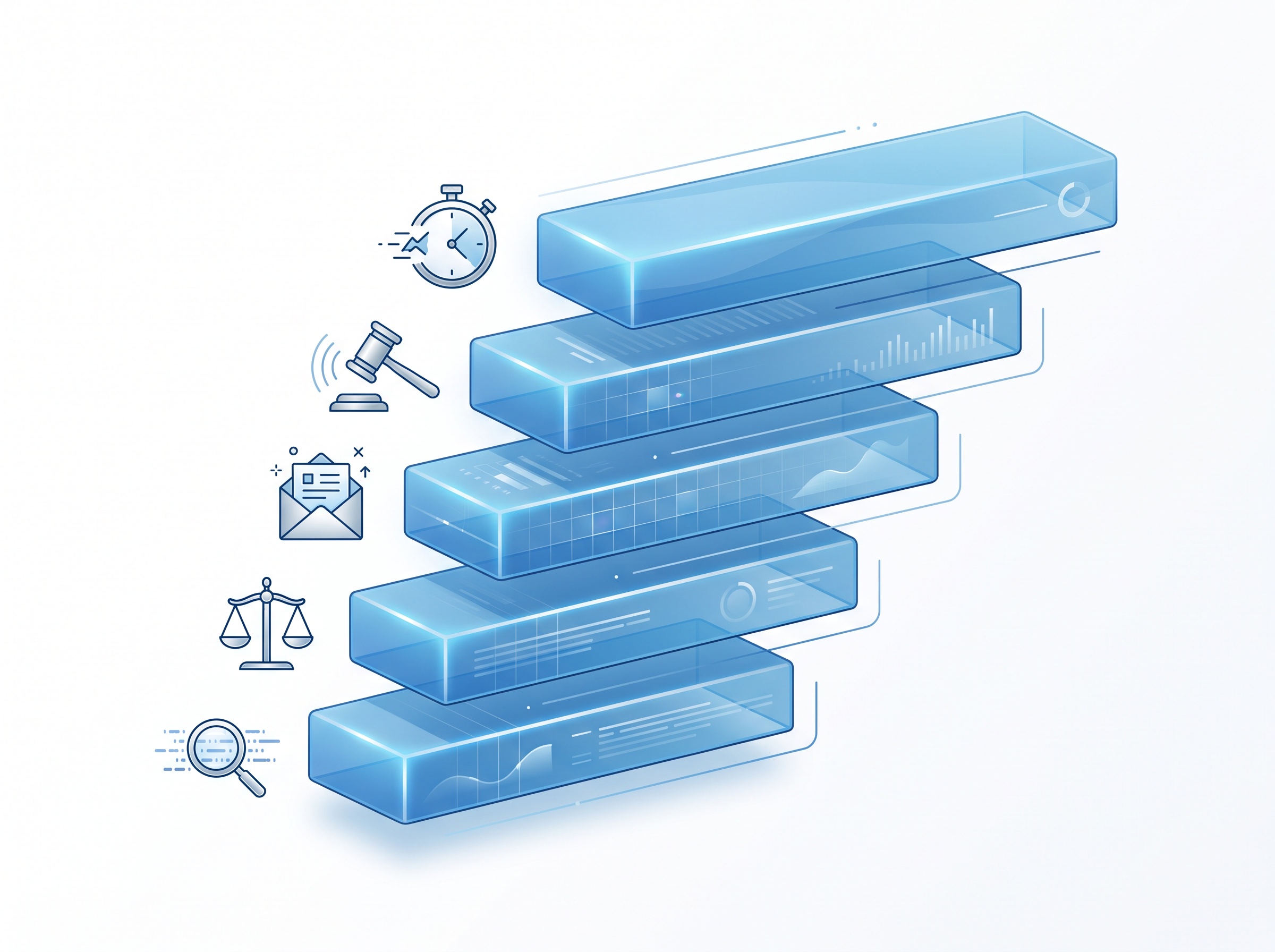
Incident response and forensics. Before anything else, you have to find out what happened. That means paying specialists to determine how the intruder got in, what they touched, and – critically for your legal obligations – exactly which patient records were exposed. This work is not optional; your notification duties depend on its findings.
Legal counsel and regulatory response. A breach involving health information is a legal event from the first hour. You will need counsel to manage regulatory reporting, coordinate the response, and defend the inevitable claims. Those hours are billed at legal rates.
Notification and credit monitoring. Every affected patient must be told, and in practice healthcare organizations almost always offer paid credit or identity monitoring to each of them. Multiply a per-person cost by tens of thousands of patients and this line alone can dwarf the ransom.

Class actions: your patient list becomes a plaintiff list
The largest and least predictable line on the invoice is litigation. Once a breach is disclosed, plaintiffs’ firms move quickly to organize the affected patients into a class action – and settlements are effectively priced per exposed record. The Central Maine Healthcare figure works out to a sizeable pool precisely because every patient in the exposed database is a potential claimant. This is why the size of your practice offers no protection. A single-location dental office that holds fifteen thousand active and inactive patient files is holding fifteen thousand potential claimants. You do not have to be a hospital chain to be sued; you only have to have lost data that a lawyer can count.
This is the same pattern we have watched repeat across the sector all year, from vendor breaches to the string of dental data breaches whose lessons we catalogued earlier in 2026. The common thread is not the ransomware brand or the attack method; it is the aftermath, and the aftermath is always more expensive than the intrusion.
The regulatory clock – and its costs – start on exposure
Under Ontario’s Personal Health Information Protection Act (PHIPA), and under HIPAA for practices with U.S. exposure, your obligations key on whether protected health information was accessed or exposed – not on whether your computers stopped working. If patient records were copied out, a reportable breach has occurred even if not one file was ever encrypted. That triggers formal notification to affected individuals and to the Information and Privacy Commissioner of Ontario, and it opens the door to regulatory findings and orders. The point is that the expensive obligations begin at the moment of exposure. This is the same reasoning that makes even routine handling of records – such as how a practice texts or emails patients under PHIPA and HIPAA – a compliance question long before any attacker is involved.
The quietest, largest cost: downtime and patients who do not return
Every day your operatory schedule is disrupted while systems are rebuilt is a day of lost production that never comes back. Practice-management software down, imaging inaccessible, front desk working on paper – the clinical day still has fixed costs, but the revenue evaporates. Healthcare consistently tops the per-record cost tables in industry breach studies for exactly this reason: the combination of highly regulated data, high litigation exposure, and operations that cannot simply pause.
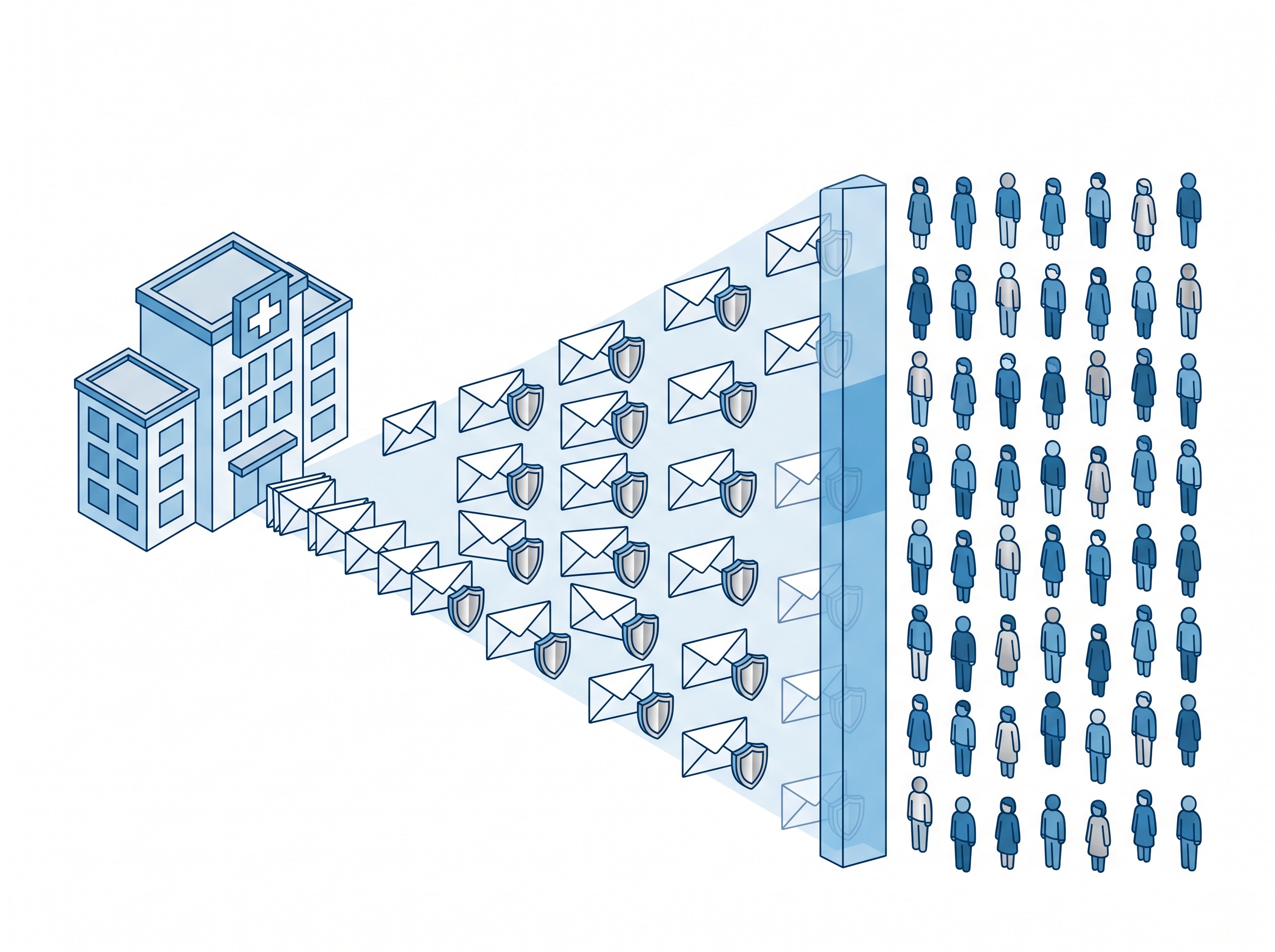
Then there is trust, which does not appear on any invoice but shows up in the appointment book. Some patients, told their dental records and personal details were exposed, quietly move to another practice. Reputation in a local dental market is built over years and dented in a single notification letter. It is the hardest cost to measure and often the most durable.
Why cyber insurance is not the escape hatch it used to be
Many practices assume a cyber-insurance policy transforms all of this back into a single, manageable premium. Increasingly, it does not. Insurers have tightened their terms, and they now expect a practice to prove it had specific controls in place – multi-factor authentication, tested backups, patched systems – before they pay a claim. We covered this shift in detail in our look at the security controls dental practices now have to prove to their cyber-insurer. The practical consequence is blunt: a practice that cannot demonstrate the basics may find its most expensive breach is the one its policy declines to cover. Insurance is a backstop for the controls, not a substitute for them.
The one line item that shrinks the whole invoice
Set the two sides of the ledger next to each other. On the aftermath side: forensics, legal fees, notification for every patient, credit monitoring, a class-action settlement priced per record, regulatory response, lost production, and eroded trust. On the prevention side: multi-factor authentication, tested and immutable backups, prompt patching, hardened remote access, and a written response plan. The entire preventable side of the bill is smaller than almost any single category on the aftermath side. That is not a scare tactic; it is arithmetic. The reason prevention is the cheapest line item on the page is that it is the only one that keeps all the others off it.

If you would like a clear, practical view of what a breach would actually cost your practice – and, more usefully, how far a modest investment in the right controls would move that number – contact Compudent Systems. We help dental practices across Ontario weigh their real exposure and put the preventable side of the ledger in order, so the only version of this story your practice ever reads is the one about someone else.
Sources & further reading:
- Central Maine Healthcare reaches $1.3 million settlement agreement for data breach – Mainebiz
- Healthcare data breach coverage – The HIPAA Journal