




May 6, 2026 Critical Weaver E-cology CVE-2026-22679 Vulnerability: Urgent Security Alert for Dental Practices Using Enterprise Collaboration Platforms
A critical remote code execution vulnerability in Weaver E-cology enterprise collaboration software poses severe security risks for dental practices and healthcare organizations using the platform. The vulnerability, tracked as CVE-2026-22679 with a maximum CVSS score of 9.8, allows unauthenticated attackers to execute arbitrary commands through exposed debug functionality.
Understanding the Critical CVE-2026-22679 Vulnerability
CVE-2026-22679 affects Weaver E-cology 10.0 versions prior to the March 12, 2026 security update. The vulnerability resides in the “/papi/esearch/data/devops/dubboApi/debug/method” endpoint, which inappropriately exposes debug functionality to unauthenticated users. Attackers can exploit this flaw by crafting malicious POST requests containing controlled interfaceName and methodName parameters.
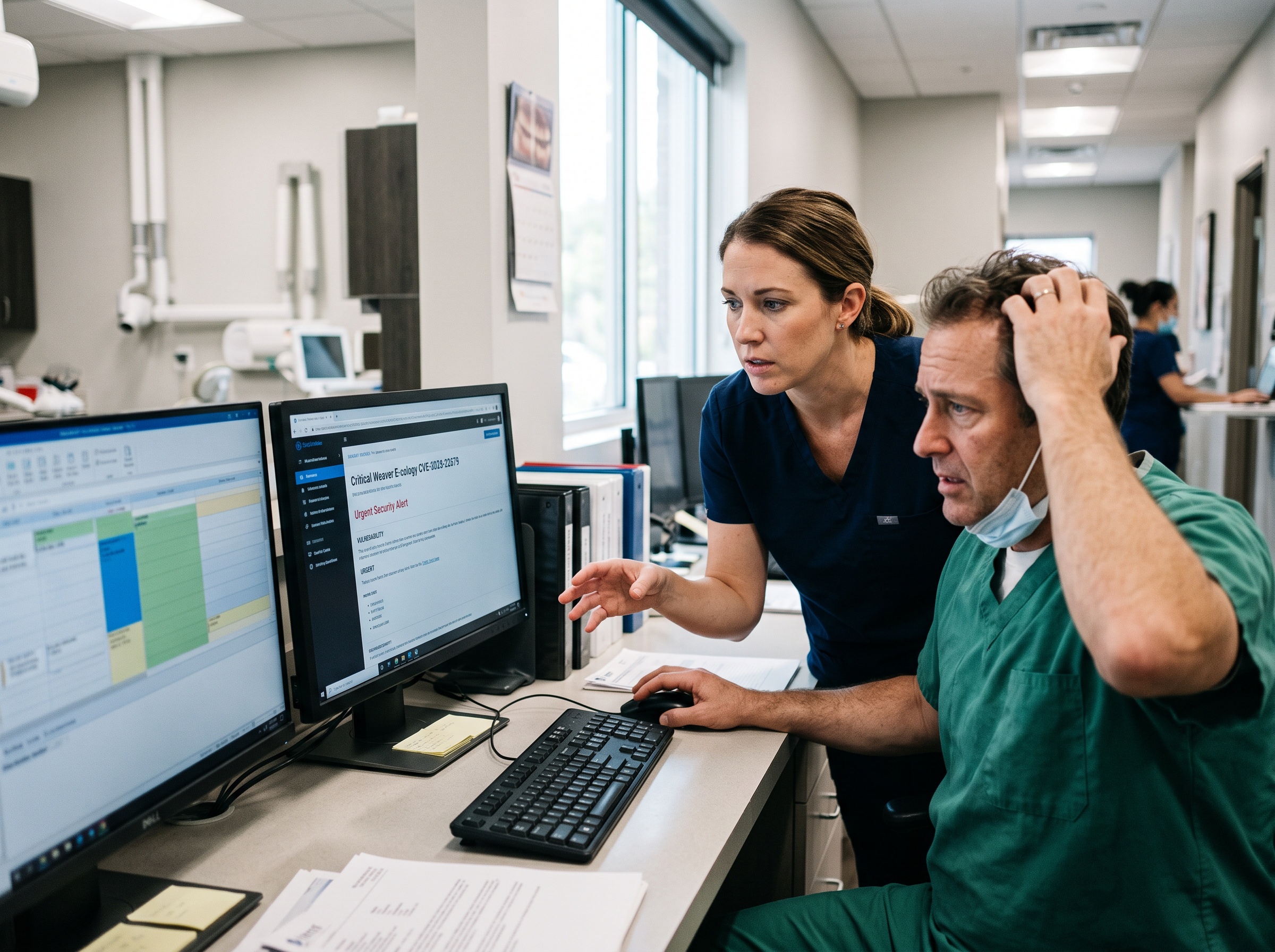

The National Institute of Standards and Technology (NIST) describes the vulnerability as allowing attackers to “craft POST requests with attacker-controlled interfaceName and methodName parameters to reach command-execution helpers and achieve arbitrary command execution on the system.” This represents one of the most severe types of vulnerabilities, enabling complete system compromise without requiring any user credentials or interaction.
Active Exploitation Timeline and Attack Campaigns
Security researchers have documented active exploitation of CVE-2026-22679 beginning shortly after patches were released. The Shadowserver Foundation first observed exploitation attempts on March 31, 2026, while the Vega Research Team identified attacks as early as March 17, 2026 — just five days after Weaver released security patches.
During documented attack campaigns, threat actors demonstrated sophisticated techniques including reconnaissance commands (whoami, ipconfig, tasklist), failed payload deployment attempts, and efforts to establish persistent access through MSI installer packages. One observed campaign involved a malicious installer named “fanwei0324.msi,” designed to appear legitimate by using the romanized Chinese name for Weaver.
Implications for Dental Practice Security
While Weaver E-cology primarily serves Asian markets, dental practices using any enterprise collaboration platforms face similar vulnerabilities in their IT infrastructure. The CVE-2026-22679 exploitation techniques highlight critical security concerns for healthcare organizations:
- Exposed Debug Interfaces: Development and debugging endpoints left accessible in production environments create significant attack surfaces
- Unauthenticated Remote Code Execution: Vulnerabilities requiring no credentials represent the highest-priority security risks
- Enterprise Platform Dependencies: Dental practices increasingly rely on comprehensive collaboration platforms for patient management and operational efficiency
- Rapid Exploitation Windows: Modern threat actors can exploit newly disclosed vulnerabilities within days of patch releases
Essential Security Measures for Dental Practices
Healthcare organizations must implement comprehensive security strategies to protect against similar vulnerabilities in their enterprise platforms. Compudent Systems recommends the following critical security measures for dental practices:

Immediate Actions
- Platform Inventory: Conduct comprehensive audits of all enterprise software platforms, collaboration tools, and patient management systems
- Security Update Verification: Ensure all platforms receive timely security updates and maintain current patch levels
- Debug Interface Assessment: Review all software platforms for exposed debugging or administrative interfaces accessible to unauthorized users
- Network Segmentation: Implement network isolation to limit potential blast radius from compromised enterprise platforms
Long-term Security Strategies
- Vendor Security Evaluation: Establish rigorous security assessment criteria for enterprise software vendors
- Vulnerability Management Programs: Implement systematic processes for tracking, testing, and deploying security updates
- Security Monitoring: Deploy comprehensive logging and monitoring for all enterprise platforms
- Incident Response Planning: Develop specific response procedures for enterprise platform compromises
Professional IT Security Support
The CVE-2026-22679 vulnerability demonstrates the complex security challenges facing modern dental practices. Enterprise collaboration platforms, patient management systems, and digital imaging solutions all present potential attack vectors requiring specialized security expertise. Dental practices benefit from professional IT security assessments to identify vulnerabilities before attackers exploit them.
Compudent Systems provides comprehensive cybersecurity services specifically designed for dental practices throughout Ontario and across Canada. Our security professionals understand the unique technology requirements of modern dental practices and can assess enterprise platforms for vulnerabilities similar to CVE-2026-22679. From initial security audits through ongoing vulnerability management, we help dental practices maintain secure, compliant, and efficient IT environments.
Contact Compudent Systems today to schedule a comprehensive security assessment of your practice’s enterprise platforms and collaboration tools. Our cybersecurity experts can identify potential vulnerabilities, implement protective measures, and develop customized security strategies that protect patient data while supporting operational efficiency.
Related Reading
- Critical FortiClient EMS Zero-Day CVE-2026-35616 Actively Exploited: Urgent Security Alert for Dental Practices
- Critical Docker CVE-2026-34040 Authorization Bypass Vulnerability: Immediate Security Alert for Dental Practices
- Critical CVE-2026-3055 Citrix NetScaler Vulnerability Under Active Reconnaissance: Dental Practices Must Act Immediately