




February 20, 2026 2026 HIPAA Security Rule Changes: What Dental Practices Need to Know
The healthcare industry is preparing for the most significant HIPAA Security Rule update in over two decades, with major changes expected to be finalized in early to mid-2026. These updates mandate annual security risk assessments, multi-factor authentication, vulnerability scanning, and enhanced encryption requirements that will fundamentally transform how dental practices and healthcare organizations protect electronic protected health information (ePHI).
Overview of the 2026 HIPAA Security Rule Changes
The upcoming HIPAA Security Rule modifications represent a comprehensive response to the escalating cybersecurity threats facing healthcare organizations. The U.S. Office for Civil Rights (OCR) has documented that hacking and IT incidents remain the top causes of healthcare data breaches, making these regulatory updates both necessary and urgent.

The new requirements build upon existing HIPAA foundations while introducing specific technical standards that many organizations have previously treated as optional or implementation-dependent. This shift from flexible guidance to mandatory requirements reflects the critical need for standardized security practices across the healthcare sector.
Mandatory Annual Security Risk Assessments
Perhaps the most impactful change is the requirement for annual security risk assessments (SRAs). While HIPAA has always required periodic risk assessments, the 2026 updates establish specific timing, scope, and documentation requirements that eliminate the ambiguity that has historically plagued compliance efforts.
Annual SRAs must comprehensively evaluate all systems that create, receive, maintain, or transmit ePHI, including third-party services and business associate arrangements. The assessments must document current security measures, identify vulnerabilities, assess the likelihood and potential impact of security incidents, and establish remediation priorities based on risk levels.
Documentation requirements for SRAs will be more stringent, requiring detailed records of assessment methodologies, findings, remediation efforts, and ongoing monitoring activities. These records must be maintained for at least six years and made available for OCR audits and investigations.
Multi-Factor Authentication Requirements
The 2026 updates establish mandatory multi-factor authentication (MFA) for all systems accessing ePHI, eliminating the previous flexibility that allowed organizations to determine appropriate authentication methods based on their risk assessments. This requirement applies to all users, including healthcare providers, administrative staff, and business associates.
MFA implementation must include at least two different authentication factors: something the user knows (password), something the user has (token or mobile device), or something the user is (biometric identifier). The rule specifies that SMS-based authentication, while acceptable, should be supplemented with more secure methods where technically feasible.
Organizations must implement MFA across all access points, including electronic health record systems, practice management software, email systems handling ePHI, and remote access solutions. This comprehensive coverage ensures that security controls remain consistent regardless of how or where ePHI is accessed.
Enhanced Encryption Standards
Encryption requirements under the 2026 updates become significantly more prescriptive, specifying minimum encryption standards for data at rest and in transit. Organizations must implement AES-256 encryption for stored ePHI and TLS 1.2 or higher for data transmission, with regular reviews to ensure encryption methods remain current with evolving security standards.
The new rules also address encryption key management, requiring organizations to implement secure key generation, storage, rotation, and destruction procedures. Encryption keys must be protected with the same level of security as the data they protect, and access to encryption keys must be limited to authorized personnel with legitimate business needs.
Legacy systems that cannot support required encryption standards must be upgraded or replaced within specified timeframes, creating significant implementation challenges for organizations with older technology infrastructures.
Mandatory Vulnerability Scanning
Regular vulnerability scanning becomes a mandatory requirement under the 2026 updates, with organizations required to conduct comprehensive scans at least quarterly and after any significant system changes. These scans must cover all systems that interact with ePHI, including network infrastructure, applications, and endpoints.

Vulnerability scanning requirements extend beyond technical assessments to include configuration reviews, security patch management verification, and third-party security assessments. Organizations must maintain documented remediation processes that prioritize vulnerabilities based on severity and potential impact on ePHI security.
The updates also establish specific timeframes for vulnerability remediation, with critical vulnerabilities requiring immediate attention and lower-priority issues addressed according to established timelines based on risk assessment results.
Business Associate Agreement Enhancements
The 2026 changes significantly strengthen business associate agreement (BAA) requirements, mandating more detailed security specifications and enhanced monitoring provisions. Business associates must demonstrate compliance with the same security standards required of covered entities, including MFA, encryption, and vulnerability management requirements.
New BAA provisions require business associates to provide detailed security documentation, undergo regular security assessments, and report security incidents within specified timeframes. Covered entities must actively monitor business associate compliance rather than relying solely on contractual assurances.
Supply chain security receives particular attention in the updated requirements, with organizations required to assess and monitor the security practices of all vendors and subcontractors that may access or process ePHI, even indirectly.
Incident Response and Breach Notification Updates
Enhanced incident response requirements under the 2026 updates establish more detailed procedures for detecting, analyzing, and responding to security incidents. Organizations must implement continuous monitoring capabilities that can detect potential security threats in real-time and trigger appropriate response procedures.
Breach notification timelines become more stringent, with preliminary notifications required within 24 hours of incident detection and detailed reports due within 72 hours. These notifications must include specific information about affected systems, data types, potential impact, and immediate containment measures.
The updates also require organizations to maintain comprehensive incident response documentation that demonstrates compliance with established procedures and regulatory requirements. This documentation must be regularly reviewed and updated to reflect lessons learned from actual incidents and evolving threat landscapes.
Implementation Timeline and Compliance Strategies
Organizations have a limited window to prepare for the 2026 HIPAA Security Rule changes, with compliance required within 18 months of final rule publication. This timeline necessitates immediate action to assess current security postures, identify gaps, and develop comprehensive implementation plans.
Successful compliance strategies should begin with thorough gap analyses that compare current practices against new requirements. These analyses should prioritize implementation activities based on regulatory deadlines, technical complexity, and resource availability.
Technology upgrades may require significant time and investment, particularly for organizations with legacy systems or limited IT resources. Early planning helps ensure that necessary changes can be completed within required timeframes without disrupting clinical operations.
Impact on Dental Practices
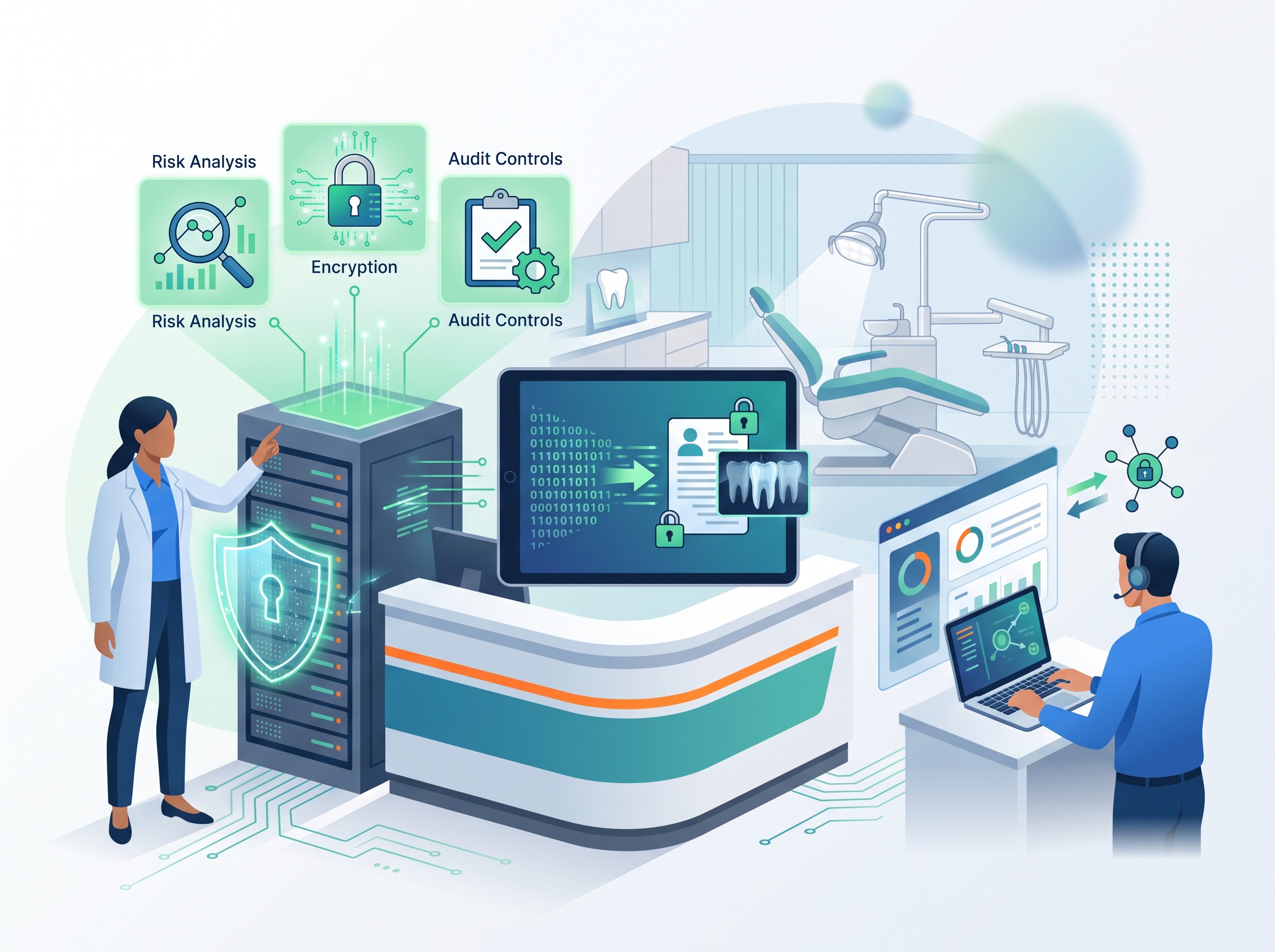
Dental practices face particular challenges in implementing the 2026 HIPAA Security Rule changes due to their typically smaller IT departments and limited cybersecurity expertise. Many dental practices will need to invest in new technology solutions, staff training, and potentially external consulting services to achieve compliance.
Practice management systems, digital radiography equipment, and patient communication platforms must all be evaluated for compliance with new security requirements. This comprehensive review may reveal the need for software updates, hardware replacements, or entirely new security solutions.
The mandatory nature of the new requirements eliminates the flexibility that many dental practices have previously relied upon to manage compliance costs and complexity. Practices must now budget for specific security technologies and procedures rather than choosing from a menu of optional safeguards.
Enforcement and Penalties
OCR enforcement of the 2026 HIPAA Security Rule changes is expected to be more rigorous than previous HIPAA enforcement efforts. The specific nature of the new requirements makes compliance assessments more straightforward, potentially leading to increased audit activities and penalties for non-compliance.
Financial penalties for violations of the updated Security Rule may be more severe, with OCR likely to view non-compliance as willful neglect given the clear and specific nature of the requirements. Organizations should expect that ignorance or resource constraints will not be accepted as valid excuses for non-compliance.
The regulatory updates also establish clearer criteria for determining compliance violations, reducing the subjective interpretation that has historically characterized HIPAA enforcement. This clarity benefits both organizations and regulators but also increases the likelihood that violations will be identified and penalized.
Preparing for the Future
The 2026 HIPAA Security Rule changes represent just the beginning of more prescriptive healthcare cybersecurity regulations. Organizations that successfully navigate these changes while building robust security foundations will be better positioned for future regulatory developments and cybersecurity challenges.
Investment in comprehensive security programs that exceed minimum regulatory requirements provides competitive advantages and reduces the likelihood of costly data breaches. Organizations should view the 2026 updates as an opportunity to modernize their security infrastructures and establish best practices that support long-term success.
As the healthcare industry continues to digitize and cyber threats evolve, regulatory requirements will likely become even more specific and demanding. Organizations that proactively embrace strong security practices today will find future compliance efforts more manageable and less disruptive to their core operations.