



October 23, 2026 Healthcare Ransomware Jumped 64% in Q3 2026: What the Newest Numbers Mean for Dental Practices
A new quarterly roundup has put hard numbers on something dental practices have sensed all year: ransomware against healthcare is not just continuing — it is accelerating. According to Comparitech’s Q3 2026 healthcare ransomware roundup, attacks on the sector rose roughly 40% compared with the previous quarter and more than doubled compared with the same period a year earlier — a pace of about 3.33 confirmed attacks every day. The United States recorded the highest number of any country in the world at 185 attacks, a 64% jump from Q2 to Q3 2026.
Those figures count only incidents that were publicly confirmed — where the victim disclosed a ransomware attack, or acknowledged a breach matching a ransomware group’s claim. The real total is certainly higher. For a dental practice, the instinct is to file this under “hospital problem.” That instinct is wrong, and the breakdown of who got hit explains why.
The targets are not just hospitals
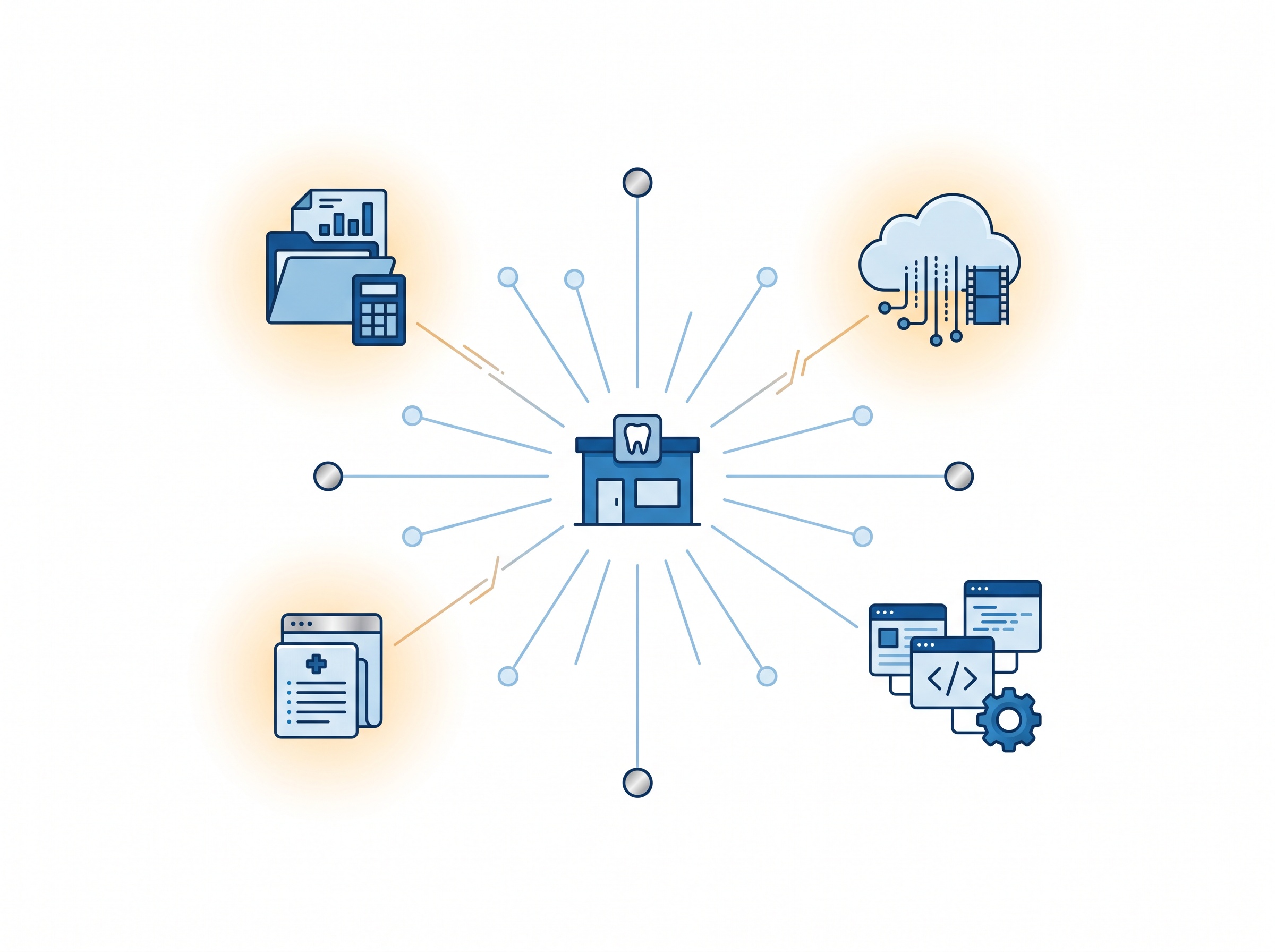
The attacks in this quarter’s count did not land only on large hospital systems. The affected organizations spanned hospitals, clinics, direct-care providers, pharmaceutical and medical-device manufacturers, medical billing providers, and health-technology companies. Read that list again with a dental practice in mind: a clinic is a direct-care provider, and the billing company, the cloud imaging vendor, and the practice-management software company your office depends on every day are exactly the kinds of “medical billing providers” and “health-tech companies” showing up in the data.
That is the part worth sitting with. A dental office rarely makes headlines on its own, but it is wired into a web of third parties that increasingly do. We have watched this play out in incident after incident this year, from outsourced billing firms appearing on leak sites to practice-management platforms exposing records. When one of those vendors is encrypted, the practice feels it — scheduling stops, claims stall, and patient data the office handed over may be in the stolen set.
Why smaller practices are attractive, not overlooked
A common assumption is that criminals chase only the big targets. In reality, the economics of ransomware reward volume and weak defenses, and small healthcare providers often offer both. A dental practice holds genuinely valuable data — names, dates of birth, health histories, insurance details, and payment information — while typically running leaner IT than a hospital. Automated attacks do not care how many operatories you have; they scan for an unpatched server, an exposed remote-desktop port, or a staff member who clicks the wrong link.
There is also a regulatory sting that makes these incidents more costly than the downtime alone. Under HIPAA — and, for Ontario practices, PHIPA — a ransomware attack on a system holding patient information is generally presumed to be a reportable breach whether or not you pay, and whether or not you can prove the data was exfiltrated. Paying a ransom does not un-steal records and does not erase the notification obligation. The clean-up, the forensic review, and the patient notifications are frequently more expensive than the ransom itself.
The numbers are an undercount — plan accordingly
Because the roundup counts only confirmed, publicly disclosed attacks, the quarter’s totals are a floor, not a ceiling. Many incidents are settled quietly or never acknowledged. For a practice, the practical takeaway is not the precise figure — it is the direction and the slope. A 64% quarter-over-quarter rise in the country where your vendors operate means the probability that one of them has a bad quarter is climbing too. Preparing for “when,” not “if,” has stopped being alarmist and become simple arithmetic.

The defenses that actually move the needle
The encouraging news is that the controls that blunt ransomware are well understood and well within reach of a dental practice. The U.S. Department of Health and Human Services and security researchers point to the same short list, and none of it is exotic:
- Robust, tested backups. This is the single most important control. Keep backups that are recent, isolated from the live network (so ransomware cannot encrypt them too), and — critically — actually tested by restoring from them. A backup you have never restored is a hope, not a plan.
- Network segmentation. If the front-desk PC, the imaging server, and the guest Wi-Fi all sit on one flat network, one infected machine can reach everything. Separating the clinical network from everything else limits how far an attacker can spread — the same discipline behind running a proper business-grade firewall rather than a consumer router.
- Access control and least privilege. Staff should have only the access their role needs, unique accounts (never a shared office login), and multi-factor authentication on anything reachable from outside.
- Patch and vulnerability management. Most ransomware walks in through a known, already-patched flaw. Keeping Windows, the practice-management software, and the server on a managed patching schedule closes those doors before they are used.
- Endpoint protection worth the name. Modern endpoint detection does more than match virus signatures — it watches for the behaviour of ransomware (mass file encryption, suspicious processes) and can stop it mid-run.
- Staff awareness. A large share of intrusions still start with a single click. Brief, regular security-awareness training and phishing tests turn the team from the soft spot into the first line of defense.
- An incident response plan. Decide — in writing, before anything happens — who to call, how to isolate affected systems, and how notification obligations get met. In an attack, speed of detection and response is what separates a contained scare from a shutdown; it is why how long an intruder goes unnoticed matters so much.

Do not forget the vendors in the count
Because so many of this quarter’s victims were billing providers, imaging vendors, and software companies, a practice’s own house being in order is necessary but not sufficient. Ask the firms that hold your patients’ data the plain questions: Do you have a signed business-associate agreement in place? How are our records protected and backed up? How, and how quickly, will you notify us if you are breached? A vendor that cannot answer clearly is a risk you are carrying whether you realize it or not.
How Compudent Systems can help
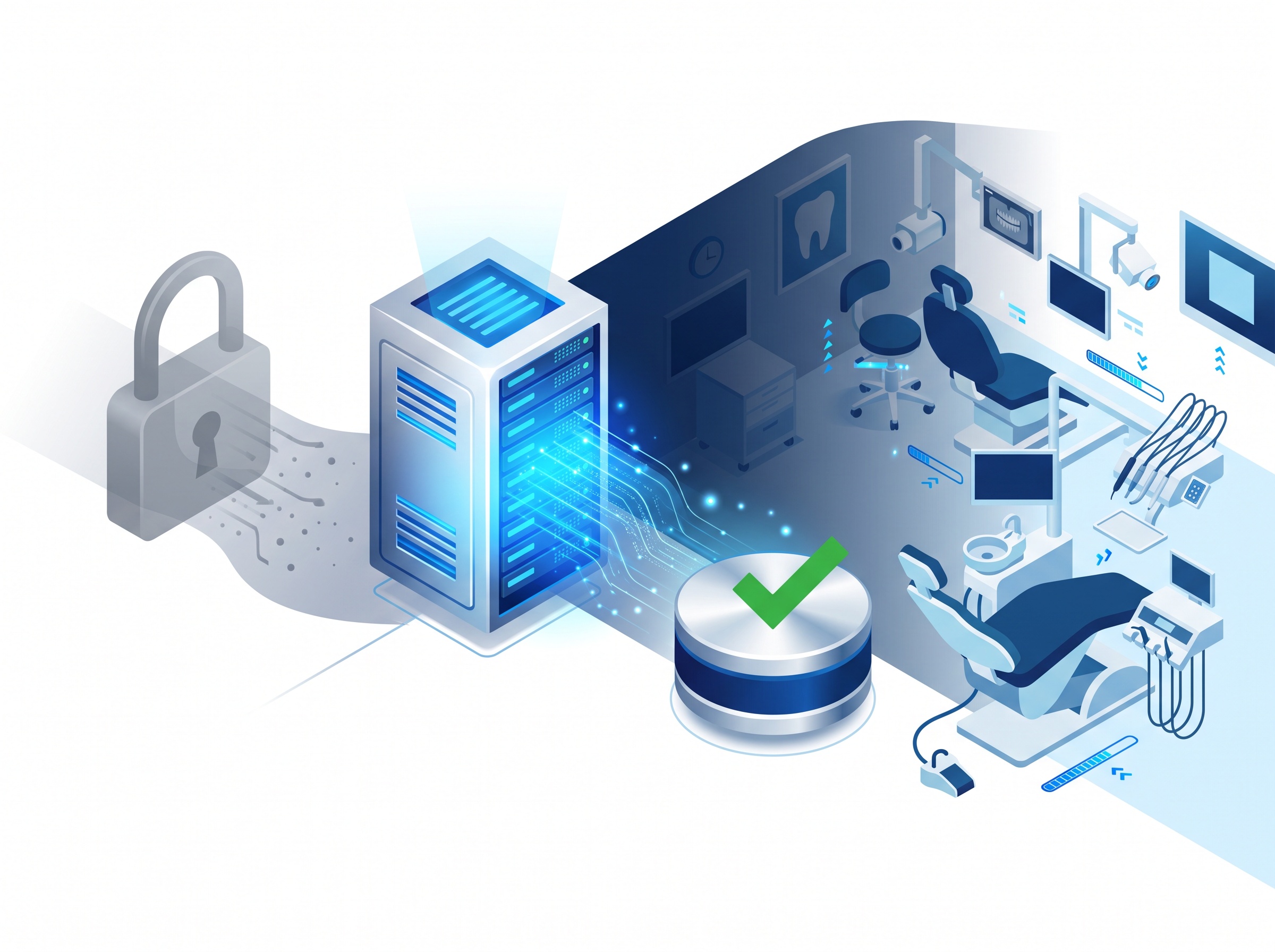
At Compudent Systems, we help dental practices across the GTA and Ontario translate statistics like these into a concrete, right-sized defense — isolated and tested backups, a segmented network behind a real firewall, managed patching, modern endpoint protection, staff training, and an incident-response plan that is written down before it is ever needed. We also help practices assess the third-party vendors that hold their data, since the newest numbers make clear that is where much of the risk now sits. If a 64% jump in attacks has you wondering how your practice would actually fare, contact Compudent Systems for a security assessment — so that “when,” not “if,” finds you ready.
Sources & further reading:
- Ransomware Attacks Against the Health Care Industry Doubled Over the Past Year (Data Privacy + Cybersecurity Insider)
- Healthcare Ransomware Roundup Q3 2026: stats on attacks, ransoms and data breaches (Comparitech)
- HHS: Ransomware and HIPAA Fact Sheet